
Karnataka Common Entrance Test
Imported from Collegedunia.
Overview
The KCET will be conducted on 23 and 24 April 2026. Kannada Language Test will be conducted on 22nd April for Kannadigas from Horanadu and Gadi Nadu.
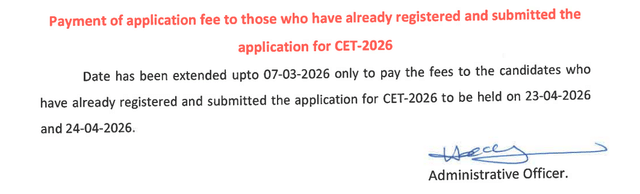
The KCET 2026 registration deadline has been extended again to 27 February 2026 from 17th February, 2026. The KEA has again extended the KCET fee payment deadline to 7 March 2026 from 3 March 2026.
As per KEA, nearly 3,15,713 candidates have registered so far for the KCET 2026.
The KCET exam 2026 is a pen-and-paper and MCQ-type exam written by the Karnataka Examinations Authority (KEA) for professional courses admission. By KCET, admission can be taken in any of the following professional courses in Karnataka, such as:
- Engineering
- Architecture
- Pharma (B.Pharma, D.Pharma, 2nd year B.Pharma)
- Veterinary Science
- Farm Science (B.Sc. Agriculture, Sericulture, etc.)
- Allied Health Sciences, Nursing, Ayurveda, Unani, Homoeopathy, BPT, BPO, etc.
For Medical and Dental courses, KCET registration is still required, even though admission is via NEET. Similarly, the Architecture Course will require NATA-2026.
Related Links:
Key Summary
- KCET is an entrance test for engineering, pharmacy, veterinary and agricultural courses, which is administered by KEA.
- The exam will be held on 23 and 24 April 2026, and results will probably be declared in May 2026.
- When compared to 2020 (₹650), registration fees have slightly increased to 2025 (₹800) for the general category.
- KCET applications are increasing every year, and the number of students seeking admission is about 2.6 lakh by 2025.
- Competition has been growing as the reappearing candidate’s percentage in 2025 has already risen to 26% as compared to 18% in 2020.
- The qualification is 45% marks in Class 12 (40% in case of the reserved categories) and certain subject-groups, depending on the course.
- KCET assesses three subjects (PCM/PB) of 60 questions each, each of which is rated at 180 marks and takes 4 hours.
- In 2026, the cutoffs are set to change, with the highest-ranking engineering colleges demanding between 1,500-6,500.
- What is KCET?
- KCET 2026 Tentative Dates
- KCET Registration Fees (2020-2025 Trends)
- How many Candidates have registered for KCET? (2025–2023)
- KCET Reappearance Trends (2020-2025)
- KCET 2026: Courses & Subjects
- KCET Eligibility Criteria 2026
- KCET Exam Pattern 2026
- KCET Exam Centres 2026
- What is the KCET Syllabus 2026?
- KCET Exam 2026 Resources
- KCET 2025 Paper Analysis
- KCET 2026: Result
- KCET 2026: Counselling
- KCET Overview 2026 FAQs
What is KCET?
Karnataka Common Entrance Test is a state entrance examination that is conducted by the Karnataka Examinations Authority (KEA). This exam enables the candidates to secure admission into professional courses such as Engineering, Agriculture, and Pharmacy and other courses in Karnataka. It is among the most competitive exams in which candidates have an opportunity to get higher education in the state.
Based on the stream of choice, KCET assesses the learning of candidates in subjects such as Physics, Chemistry, Mathematics and Biology.
- Conducted by Karnataka Examinations Authority (KEA).
- Provides engineering, agriculture, veterinary courses and pharmacy courses.
- For Karnataka candidates and non-Karnataka candidates.
- Various subjects such as Physics, Chemistry, Mathematics, and Biology.
- Admissions based on KCET rank and counselling.
KCET 2026 Highlights
| Particulars | Details |
|---|---|
| Full Exam Name | Karnataka Common Entrance Test |
| Short Exam Name | KCET |
| Conducting Body | Karnataka Examination Authority (KEA) |
| Frequency | Once a year |
| Exam Level | State Level Exam |
| Mode of Application | Online |
| Mode of Exam | Offline |
| Mode of Counselling | Online |
| Exam Duration | 3 hours |
| Courses Offered | Engineering & Technology, Bachelor of Pharmacy (BPharma), Diploma in Pharmacy (DPharma), Agriculture (Farm Science), and Veterinary courses |
Read More: KCET Seat Matrix
KCET 2026 Tentative Dates
The KCET 2026 exam date is 23 and 24 April 2026. The official notification has been released on 17 January, 2026. You should follow the official Karnataka Examinations Authority (KEA) website for definitive dates and to complete the application process.
| 2026 | Event |
|---|---|
| January 17, 2026 | Release date of the KCET notification |
| January 17, 2026 | KCET Application Form Date |
| February 27, 2026, till 11:59 PM (Closed) | Last date for Registration for KCET |
| 7 March 2026(Extended) | Last date to pay Fees |
| March 2026 | Application Correction Facility |
| April, 2026 | KCET Admit Card |
| April 23 and 24 (Final) | Exam Dates |
| April, 2026 | Provisional Answer Key |
| April, 2026 | Answer Key objection Window |
| April, 2026 | Final KCET Answer Key |
| May, 2026 | Offline KCET Document verification |
| May, 2026 | KCET Mark entry Start Date |
| May, 2026 | KCET Final Result |
To help you plan better, here’s a year-wise overview of KCET exam dates and important events from 2025 to 2023, so you can get a clear idea of the usual schedule.
| Year | KCET Exam Date(s) |
|---|---|
| 2025 | April 16 & 17 (Kannada language test on April 15) |
| 2024 | April 18 & 19 (Kannada test on April 20) |
| 2023 | May 20 & 21 (Kannada language exam on May 22) |
Ques: How to find these changes in the dates of the KCET exam each year?
Ans. The KCET exam timetable will be based on the school timetable and state board examination tests and exams conducted nationally, such as the JEE or NEET. KEA makes sure that it does not clash and manipulates schedules. That is why KCET is traditionally conducted in July or August, but nowadays it is arranged mainly in April or May.
Ques: When will the KCET results be announced?
Ans. The KCET results are normally announced one month following the exam. For example, the April 2025 exam declared results in May, whereas older years with later exams showed results in later months. The candidates should anticipate the results of the KCET 2026 to come in May or June, depending on the KEA schedule.
KCET Registration Fees (2020-2025 Trends)
- The fee for the KCET registration has been revised; the registration fees for the General category have been revised from 650 INR in 2020 to 800 INR in 2025, and the fee for non-Karnataka candidates has been revised from 750 INR to 900 INR in order to accommodate the higher level of processing.
- Whereas fees for SC/ST/OBC categories remained the same at 500 INR during all those years.
- Increased fee reflects the surging costs of carrying on offline tests, holding on to digital infrastructure, and executing government decisions.
| Year | General Category (Fees in INR) | SC/ST/OBC(Fees in INR) | Outside Karnataka(Fees in INR) |
|---|---|---|---|
| 2020 | 650 | 500 | 750 |
| 2021 | 650 | 500 | 750 |
| 2022 | 700 | 500 | 800 |
| 2023 | 750 | 500 | 800 |
| 2024 | 750 | 500 | 800 |
| 2025 | 800 | 500 | 900 |
Ques: What are the differences between the registration fees of the categories at KCET?
Ans. The cost of registering at KCET is quite varied so that every candidate can afford it. To enhance inclusivity in higher education, reserved category students like SC, ST and OBC pay reduced fees of 500 INR as compared to 800 INR. Both policy-based and administrative factors of the KEA influence the fees paid by general and outside Karnataka candidates.
Ques: Can KCET fees be refunded in case of withdrawal of a candidate?
Ans. Registration fees at KCET are mostly not refundable, whether a candidate is present to take the exam or not. Over the years, KEA has upheld the policy in order to make the application process smooth. As such, only after a candidate is sure of appearing during the exam should they complete their registration to prevent losing money with no benefits.
How many Candidates have registered for KCET? (2025–2023)
According to the data, KCET registrations have increased by 8.3% from 2024 to 2025 and by around 18% compared to 2023. This increase in the number of registrations is because of growing interest in engineering and professional courses in Karnataka.
| Year | Number of Candidates Registered |
|---|---|
| 2025 | 2.6 lakh |
| 2024 | 2.4 lakh |
| 2023 | 2.2 lakh |
Ques. What is the increasing trend of applicants in KCET every year?
Ans. The demand to study engineering, pharmacy, veterinary and agricultural programs in Karnataka has been the primary cause of increased KCET applicants. Students are more inclined to attend KCET due to the state quota advantage and the low cost of education than the private universities. Increasing college intake and government policies also contribute to increasing registrations.
Ques: Does increased registration make KCET more competitive?
Ans. Yes, increasing registrations means tougher competition since the number of aspirants rises faster than the available seats. With over 2.6 lakh candidates expected in 2025, securing top ranks becomes challenging. Students must prepare strategically, as higher participation directly influences cutoffs, seat allocation, and admission chances in top Karnataka colleges.
KCET Reappearance Trends (2020-2025)
The table indicates that there is a consistent growth of the recurring candidates in the years 2020 to 2025. Up by 18% in 2020 to 26% in 2025, making a 44% growth over the years. This is an indication that the number of students who are reappearing for KCET wants to improve their scores and ranks, to get good college.
| Year | Approx. % of Reappearing Candidates |
|---|---|
| 2025 | 26% |
| 2024 | 25% |
| 2023 | 23% |
| 2022 | 22% |
| 2021 | 20% |
| 2020 | 18% |
Ques: How come there is a reappearance of many students in KCET?
Ans. Students re-attend the KCET to get higher rankings and secure a place in a better college or department, such as Computer Science and Electronics. As there is no age restriction at KCET, most applicants resort to a second attempt to better prepare and maximise the opportunities of the leading professional institutions.
Ques: Is reappearing an indicator of better chances of admission in KCET?
Ans. Yes, redoing can also give them a much better chance of admission, provided the candidates are better prepared and score higher compared to the previous time. Between 50 and 75 per cent of students in reattempt seem to improve their noticeable rank. Nonetheless, they have to be studied regularly, the mistakes of the past should be learned, and mock examinations should be practised because each year the competition increases with the number of candidates.
KCET 2026: Courses & Subjects
Details of Subjects to appear in CET-2026 for various Professional Courses are given below:
| For Admission to 1st Year | Subjects to appear inCET-2026 |
|---|---|
| Engineering / Technology courses | PCM |
| Farm Science courses(B.Sc. Agriculture, Sericulture, Horticulture, etc. | PCMB |
| Bachelor of Veterinary Science and Animal Husbandry, Naturopathy & Yoga and B.Sc. (Nursing) | PCB |
| B-Pharma, 2nd Year B. Pharma, Pharma-D | PCM or PCB |
For other courses, candidates have to take an entrance exam
| Medical, Dental and AYUSH | UGNEET | Candidates must compulsorily register For CET-2026, fill out the application andpay the fees to become eligible toparticipate in the counselling. |
|---|---|---|
| Architecture | NATA |
| For admission to B.P.T., B.Sc. Allied Health Sciences, BPO courses -Selection is based on PU Marks | NO Entrance Exam – but they must compulsorily register for CET-2026 and Fill out the application and pay the fees to become eligible to participate in the counseling |
KCET Eligibility Criteria 2026
KCET 2026 eligibility criteria specify the minimum educational qualifications and other conditions required to apply for the exam. Candidates must ensure that they meet all the eligibility requirements before applying for the exam.
General Eligibility
- Must be an Indian citizen
- No upper age limit, but a minimum of 17 years for some courses like B.Pharm.
- Passed or appearing in the 2nd PUC from a recognised board.
Course-wise Academic Eligibility
| Course | Qualifying Exam & Subjects Required | Minimum Aggregate Marks (Relevant Subjects) | Reserved Category Relaxation |
|---|---|---|---|
| B.Arch | 2nd PUC + valid NATA score | As per COA/NATA rules | As per COA/NATA rules |
| B.E. / B.Tech | 2nd PUC with Physics + Mathematics + Chemistry/Bio-Tech/Biology/Electronics/Computer | 45% | 40% (SC/ST/Cat-1/2A/2B/3A/3B) |
| B.Pharm / Pharma-D | 2nd PUC with Physics + Chemistry + Biology/Mathematics OR Diploma in Pharmacy | 45% | 40% |
| B.V.Sc & A.H | 2nd PUC with Physics + Chemistry + Biology + English | 50% | 40% |
| Farm Sciences (B.Sc Agri/Horti/Forestry/Sericulture etc.) | 2nd PUC with Physics + Chemistry + Mathematics + Biology | No minimum (but merit-based) | No minimum (merit-based) |
| Naturopathy & Yoga | 2nd PUC with Physics + Chemistry + Biology + English | 50% | 40% |
| BPT (Physiotherapy) | 2nd PUC with Physics + Chemistry + Biology + English | 40% | 35% |
| BPO (Prosthetics & Orthotics) | 2nd PUC with Physics + Chemistry + Biology/Mathematics + English | 50% | 45% |
| B.Sc AHS (Allied Health Sciences) | 2nd PUC with Physics + Chemistry + Biology + English | 35% | As per category rules |
Also Read: KCET 2026 Detailed Eligibility Criteria
KCET Exam Pattern 2026
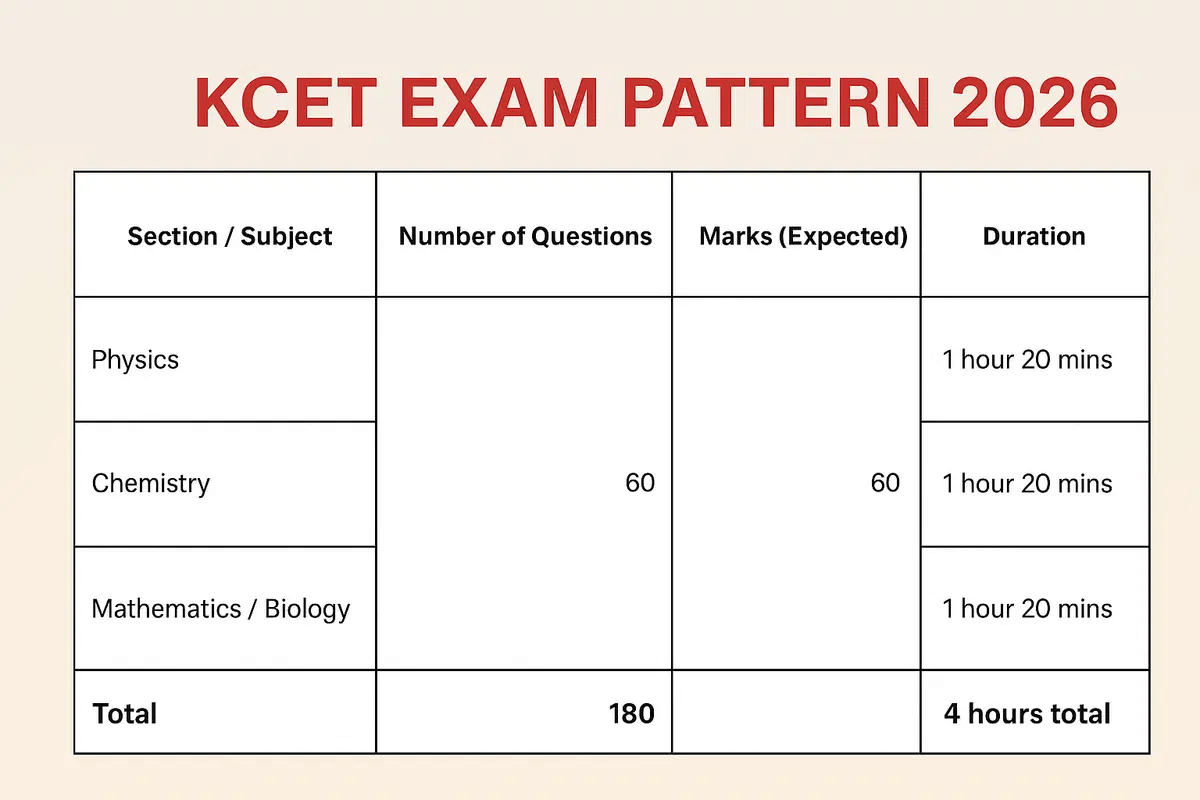
The KCET exam pattern will be similar to that of the previous years, and has three parts: Physics, Chemistry and Mathematics/Biology with 60 marks each on a question.
- Mode of Exam: Offline ( Pen and Paper)
- Medium of exam: English and Kannada.
- Number of Sessions: 4 sessions in total: one for each subject.
- Total Questions: Each Session: 60 MCQs and 1 hour 20 minutes ( 80 Minutes) per section.
- Total Mark: (PCM): 180 marks ( 60 per subject x 1 mark each)
- Question Type: MCQs with 4 options and 1 correct answer.
- Marking Scheme: +1 mark for each correct answer and no negative marking for wrong answers.
| Subject | No. of Questions | Marks | Duration |
|---|---|---|---|
| Physics | 60 | 60 | 80 mins |
| Chemistry | 60 | 60 | 80 mins |
| Maths/Biology | 60 | 60 | 80 mins |
| Total | 180 | 180 | 4 hrs |
Ques: What is the pattern of the KCET 2026 marking scheme?
Ans. The marking scheme of KCET 2026 is simple. Every right answer will be one mark, and there is no negative point for being wrong. This will motivate the students to solve all the questions without fear of losing points, and make time management and precision the same in getting more points in the examination.
Ques: How long will each subject of KCET 2026 take?
Ans. The subject papers on KCET 2026 are Physics, Chemistry and Mathematics / Biology- each subject paper is 80 minutes. The exam has a total of 4 hours in duration in the sessions. Candidates should be able to properly manage their time on each paper because all subjects are given equal weight, and each subject has 60 questions with 60 marks each.
Read more: KCET Paper Analysis
KCET Exam Centres 2026
The exam centres will be released on the official website. Candidates can choose exam centres from the list given by KCET for 2026 during the registration process.
| Exam Centre (City/District) | Exam Centre (City/District) | Exam Centre (City/District) |
|---|---|---|
| Bangalore | Chitradurga | Mangalore |
| Bagalkot | Davangere | Moodabidre |
| Doddaballapur | Dharwad | Puttur |
| Belgaum | Hubli | Ujire |
| Athani | Gadag | Mysore |
| Chikodi | Gulbarga | Raichur |
| Gokak | Hassan | Ramanagara |
| Bellary | Haveri | Channapatna |
| Bidar | Kanwar | Shimoga |
| Basavakalyan | Kumta | Bhadravathi |
| Bhalki | Sirsi | Sagar |
| Bijapur | Kolar | Tumkur |
| Chamarajanagar | Koppal | Tiptur |
| Kollegal | Mandya | Udupi |
| Chikkaballapur | Krishnarajpet | Karkala |
| Chikmagalur | Madikeri | Kundapura |
| Yadgir | – | – |
What is the KCET Syllabus 2026?
KCET syllabus is based on the 1st and 2nd PUC (Class 11 and 12) curriculum of the Karnataka State Board.
| Subject | Topics Covered (Class 11 & 12 PUC – Karnataka State Board) |
|---|---|
| Physics |
|
| Chemistry |
|
| Mathematics |
|
| Biology |
|
Check:
- KCET 2025 April 16 Physics Question Paper with Solutions
- KCET 2025 April 16 Chemistry Question Paper with Solutions
Ques: How is the KCET syllabus decided?
Ans. The KCET curriculum is completely based on the Class 11 and 12 (1st and 2nd PUC) curriculum as prescribed by the Karnataka State Board. It has topics from Physics, Chemistry, Mathematics and Biology, which makes it comply with state education standards. The exact preparation of the students should be referred to the PUC textbooks.
Ques: Could KCET be prepared using the NCERT books?
Ans. Yes, the NCERT books can give a very good background in preparation for KCET because the syllabus is very similar. Nevertheless, Karnataka State Board PUC textbooks should be preferred by students since KCET requires strict adherence to the syllabus. Conceptual knowledge may be enhanced with the help of using both sources, and the accuracy of responding to state-level examination questions can be increased.
Check: KCET Chapter-Wise Weightage
KCET 2025 Paper Analysis
| Subject | Difficulty Level | Question Paper PDF |
|---|---|---|
| Kannada | Moderate | Download PDF |
| Physics | Easy to Moderate | Download PDF |
| Chemistry | Moderate | Download PDF |
| Biology | To be Updated | Download PDF |
| Mathematics | To be Updated | Download PDF |
Ques. How was the level of difficulty of the KCET 2025 subjects?
Ans. In KCET 2025, Physics was easy to moderate, and Chemistry and Kannada were moderate. The difficulty levels of Biology and Mathematics need to be updated. On the whole, the paper had a proper mix, and students with good preparation managed well.
Ques. Where can the students download the KCET 2025 question papers?
Ans. Students can download the question papers for Kannada, Physics, and Chemistry from the given PDF links. Biology and Mathematics papers will be uploaded later. These PDFs are practice-friendly, revision-friendly, and good to see the exam pattern and type of questions being asked.
KCET Exam 2026 Resources
If you are preparing for the KCET exam 2026, then it is very important to know which KCET resources you need to follow that will make a difference. Below, we have mentioned some recommended resources that you need to follow:
| Resource Type | Why It’s Important | How to Use Effectively |
|---|---|---|
| NCERT & State Board Textbooks (PU1 & PU2) | KCET is based primarily on the NCERT + Karnataka State Board syllabus. Questions focus on concept clarity, not advanced JEE topics. | Study each chapter thoroughly, revise multiple times, and ensure strong fundamentals. |
| Personal Short Notes | Useful for quick revisions, especially in the last month before the exam. Helps consolidate concepts in your own words. | Prepare handwritten notes while studying; keep them concise and organized for easy last-minute reference. |
| PYQs (Previous Year Questions) | Reveals question trends, commonly repeated topics, and difficulty levels. Helps focus on high-weightage areas. | Solve at least 10 years’ PYQs, practice topic-wise and subject-wise to strengthen weak areas and improve retention. |
| Mock Tests | Builds speed, accuracy, and time management under real exam conditions. Identifies mistakes before the actual test. | Take regular full-length mocks with strict time limits (80 min/paper). Analyze errors after each test to improve performance. |
| State Board Textbooks (PU1 & PU2) | Official PDF Download |
|---|---|
| NCERT ( Class 11 and 12) | Official PDF Download |
KCET Previous Year Questions
KCET past question papers are also useful in preparation because they enable students to know the patterns of questions.
| Year | Availability of Question Papers | Link |
|---|---|---|
| 2024 | Available on the KEA website | Official Link: Click Here |
| 2025 | Available on the KEA website | Official Link: Click Here |
Or you can check: KCET 2025 Question Paper with Answer Key PDF
| KCET 2025 Paper | Download PDF | Solutions PDF |
|---|---|---|
| KCET 2025 Kannada Question Paper with Answer Key | Download | Check Solution |
| KCET 2025 Physics Question Paper | Download | Check Solution |
| KCET 2025 Chemistry Question Paper | Download | Check Solution |
| KCET 2025 Biology Question Paper | Download | Check Solution |
| KCET 2025 Mathematics Question Paper | Download | Check Solution |
Ques: How has the KCET past year's paper assisted in preparation?
Ans. Answering KCET past year papers enables students to know the level of difficulty of the exam, commonly asked topics and distribution of questions. Those give information regarding time management and speed of problem-solving. Frequency also helps one to build confidence, overcome fear of exams, and helps students to know areas of strength and weaknesses so that they can devise specific strategies of preparation.
Ques: Are the KCET past year question papers in both English and Kannada?
Ans. The previous year's question papers of KCET are in English as well as Kannad,a just like the real exam. This assists the candidates in preparing in the language of their choice. KEA publishes official papers annually, and bilingual solved papers are frequently published by coaching institutes to aid the aspirants of different academic backgrounds.
KCET Mock Test
Ques: How significant are KCET mock tests in preparation?
Ans. KCET practice tests allow the candidates to practice under the actual exam environment, gain time management skills, and gain confidence. They indicate both strengths and weaknesses, and allow focused preparation. Frequent drilling with the help of mock tests could really boost the scores by increasing the speed of problem-solving and accuracy, which is extremely important in the context of KCET, which is highly competitive and time-constrained.
Ques: What are the places Where can the students find KCET mock tests?
Ans. The KCET Mock exam can be accessed online at the official KEA site or at the numerous coaching schools, which provide online practice and offline mock exams. These materials contain past year questions, sample papers and full-length practice exams. It is strongly suggested that in order to master the exam patterns and perform better in the timed environment, it is highly recommended to practice various mock tests.
KCET 2026: Result
The result is usually declared one month after the exam was conducted. In 2025, it was declared 37 days after the exam. The result for the Kannada Language Test will be announced separately by KEA. The candidates appearing for the Language test require a minimum of 12 marks out of 50 to qualify.
The overall pass percentage was 88.36% in 2025 with 2,75,677 qualified candidates.
| Particular | Date (Expected) |
|---|---|
| Result | May 2026 |
KCET 2026: Counselling
The online counselling will start after the declaration of results, following the document verification. After that, candidates will enter options for preferred colleges and courses. The process will include multiple rounds, such as initial allotment, upgradation, etc.
KCET Overview 2026 FAQs
Ques. Is KCET tougher than CUET?
Ans. KCET is specialised in Physics, Chemistry, Mathematics, and Biology, making it competitive to engineering and medical aspirants in Karnataka. CUET, on the other hand, is multisubject and serves central universities. KCET is more difficult in the case of engineering admissions because it focuses on problem-solving abilities and the mastery of the subject matter.
Ques. What is the number of times KCET is done every year?
Ans. The Karnataka Examination Authority (KEA) is the organiser of KCET, held once a year. As compared to JEE Main, which also has two sessions per year, KCET has one attempt. This is one chance that candidates must study well since the exam is used to decide who will take professional courses in colleges in Karnataka during that particular academic year.
Ques. Is it possible to use KCET scores beyond Karnataka?
Ans. KCET is used only to make admissions in professional colleges in Karnataka. Out-of-state students are eligible to apply as long as they fulfil domicile requirements. In contrast to other exams like JEE Main, KCET does not offer national recognition and is therefore region-specific to Karnataka-based universities and state-authorised professional institutions.
Ques. What is the exam language of KCET?
Ans. KCET is conducted in English and Kannada languages, with a choice given to the candidates on their preferred medium. Those students who feel at ease with the Kannada language enjoy the advantage of regional language assistance, whereas other students can choose English. Such a bilingual solution will be fair and accessible to all students who will be appearing in the Karnataka state entrance exam.
Ques. What age limit does KCET 2026 have?
Ans. No maximum age requirement exists to feature in KCET 2026. Nevertheless, the candidates should meet the educational requirements of eligibility, like passing Class 12 with subject groupings. There can be minimum age requirements for professional courses, such as veterinary science; however, in most cases, age is not a major problem for KCET aspirants.
Ques. Is the Kannada language test mandatory?
Ans. Yes, if you are a Horanadu and Gadinadu Kannadiga candidate. If you have studied Kannada for 7 years, you are exempt from the test.
Eligibility
Karnataka Examination Authority (KEA) prescribe the eligibility criteria for KCET 2026. The official notification has not been released yet. Candidature of students will be purely provisional, subject to the fulfilment of academic and other eligibility criteria. There is no upper age limit in the KCET 2026 exam.
Only the candidate who holds the verification slip will be eligible to enter their priority of options for allotment of seats for admission to Professional Courses. The verification slip is a crucial official document issued by KEA after successful document verification.
In 2025, around 10,000 had their results initially withheld due to wrong registration numbers and the 2nd PUC marks entry.
Over 400 candidates, who reappeared in KCET 2025 after being allotted seats in the previous years but did not join, had their ranks withheld till pending investigation.
Related Articles:
Key Summary
- There is no restriction on the number of times you can appear for KCET. In 2025, 26% were reappearing candidates.
- The Kannada Language Test does not affect rank or cutoff since it is a qualifying exam.
- KEA considers the best PUC marks, including improvement examinations, for 50% weightage in rank calculation.
- Candidates must have at least 40% disability as per the Rights of Persons with Disabilities Act, 2016, for reservation as PwD.
- KCET 2026: Eligibility Criteria PDF
- KCET Eligibility 2026: General Criteria
- KCET Eligibility 2026: Course-wise Criteria
- KCET Eligibility 2026: Kannada Language Test
- KCET 2026: Agriculturist Quota Eligibility
- KCET Eligibility 2026: Specific Clauses
- KCET Eligibility 2026: Documents Required
- KCET Eligibility 2026: Frequently Asked Questions
KCET 2026: Eligibility Criteria PDF
The KEA releases the detailed eligibility criteria every year along with the official notification on its official website.
KCET Eligibility 2026: General Criteria
- Must be an Indian citizen
- No upper age limit, but a minimum of 17 years for some courses like B.Pharm.
- Passed or appearing in the 2nd PUC from a recognised board.
KCET Eligibility 2026: Course-wise Criteria
Architecture course (B.Arch)
- The norms prescribed in COA / NATA/ Admission Rules, and relevant Government orders, apply in determining the eligibility and merit for admission to the Architecture course.
Engineering / Technology courses (B.E. / B.Tech)
- Passed in 2nd PUC / 12th Std / Equivalent Exam with English as one of the Languages
- Minimum of 45% of Marks in aggregate in Physics and Mathematics, along with Chemistry /Bio-Technology / Biology / Electronics / Computer.
- (40% for SC, ST, Cat-1, 2A, 2B, 3A and 3B category candidates)
Farm Science courses
- Passed in 2nd PUC / 12th Std / Equivalent exam with Physics, Chemistry, Mathematics, and Biology as optional subjects.
- In the case of Agriculturist Quota, the merit list will be prepared based on 25% marks each, secured in the concerned combinations in II year PUC (PCMB) & CET and 50% marks secured in the Practical Test.
- A minimum of 50% marks in the Practical Examination is required to claim a seat under the Agriculturist Quota.
Bachelor of Veterinary Science and Animal Husbandry (B.V.Sc. & A.H.)
- Passed in 2nd PUC / 12th Std.
- Aggregate minimum of 50% marks in Physics, Chemistry, Biology, and English subjects.
- (40% for SC, ST, Cat-1, 2A, 2B, 3A and 3B category candidates)
- Merit will be based on 50% of the Marks secured in CET (Physics, Chemistry, and Biology) and 50% of the marks scored in the practical test.
B-Pharma
- Passed in 2nd PUC / 12th Std with Physics, Chemistry, and Biology or Physics, Chemistry, and Mathematics
- Minimum of 45% of Marks in aggregate in Physics, Chemistry, and Biology subjects.
- (40% for SC, ST, Cat-1, 2A, 2B, 3A and 3B category candidates)
OR
- Passed in Diploma in Pharmacy Examination from an institution approved by the Pharmacy Council of India and has secured a minimum of 45% marks. (40% for SC, ST, Cat-1, 2A, 2B, 3A and 3B category candidates)
2nd Year B. Pharma
- Passed in Diploma in Pharmacy Examination from an institution approved by the Pharmacy Council of India
- minimum of 45% marks. (40% for SC, ST, Cat-1, 2A, 2B, 3A and 3B category candidates.
Pharma-D
- Passed in 2nd PUC / 12th Std with Physics, Chemistry, and Biology or Physics, Chemistry, and Mathematics.
OR
- Passed in Diploma in Pharmacy Examination from an institution approved by the Pharmacy Council of India.
Naturopathy & Yoga
- Passed in Q.E. with Physics, Chemistry, and Biology as optional subjects, and English as one of the languages
- A minimum of 50% marks in Physics, Chemistry, and Biology subjects in the Q.E. is eligible for admission to Naturopathy & Yoga courses.
- 40% of marks in Q. E. in case of SC, ST, Category–I, and OBC (2A, 2B, 3A, and 3B) Category candidates.
BPT (Bachelor of Physiotherapy)
- Passed in Q. E. with Physics, Chemistry, and Biology as optional subjects and English as one of the languages of study
- A minimum of 40% marks in Physics, Chemistry, and Biology subjects in the Q.E. is eligible for admission to BPT courses.
- 35% of marks in Q. E. in case of SC, ST, Category–I, and OBC (2A, 2B, 3A, and 3B) Category candidates.
BPO (Bachelor of Prosthetics and Orthotics)
- Passed in Q. E. with Physics, Chemistry and Biology / Mathematics as optional subjects, and English as one of the languages
- Minimum of 50% marks in Physics, Chemistry, and Biology / Mathematics subjects in the Q.E.is eligible for admission to BPO courses.
- 45% of marks in Q. E. in case of SC, ST, Category–I, and OBC (2A, 2B, 3A, and 3B) Category candidates.
B.Sc. AHS
- Passed in Q. E. with Physics, Chemistry, and Biology as optional subjects, and English as one of the languages
A minimum of 35% marks in Physics, Chemistry, and Biology subjects in the Q.E. is eligible for admission to the BPT and BPO courses.
Ques. Can I apply for Engineering if I have Biology instead of Mathematics?
Ans. No, Mathematics is compulsory for Engineering courses. If you have combination of PCB, you can apply for B.VSc and AH, Naturopathy & Yoga, and B.Sc (Nursing) courses.
Ques. Is there any special eligibility for B.Arch (Architecture) in KCET 2026?
Ans. Yes, students must have to qualify National Aptitude Test in Architecture (NATA) and they must compulsorily register for CET-2026, fill the application and pay the fees to become eligible to participate in the counseling.
KCET Eligibility 2026: Kannada Language Test
The Kannada Language Test, which is a mandatory qualifying test, will be conducted on 22nd April. The test will be conducted only in Bengaluru, Belagavi, Vijayapura, and Mangalore; therefore, such candidates will have to appear for KCET 2026 in a test centre located at these centres only.
- The candidates claiming eligibility for Government seats under Horanadu & Gadinadu Kannadiga clauses and whose mother tongue is Kannada, Tulu, Kodava or Beary, will have to give the language test to establish their ability to speak, read and write Kannada.
- The minimum passing marks shall be 12 out of 50 marks to be considered for assignment of ranks and to become eligible for allotment of seats in CET-2026.
- However, the Horanadu and Gadinadu Kannadiga candidates, who have studied TEN full academic years in Kannada Medium from 1st standard to 10th standard in places outside the state of Karnataka, need not appear for the Language Test.
| Subject | Date | Day | Timings | Syllabus | Marks |
|---|---|---|---|---|---|
| Kannada Language Test | 22 April 2026 | Wednesday | 10:30 am - 11:30 am | 4th Standard Level | 50 |
Ques. Do people fail the Kannada language test?
Ans. Yes, in 2025, around 456 candidates out of 1520 failed, and 12 candidates scored 0/50 in the Language test.
Ques. What is the syllabus for the Kannada language test?
Ans. The syllabus will be of 4th standard level, which can easily be covered by students to qualify the paper. Students can use the following books to prepare for the KCET Kannada language paper.
- Kannada Alphabet: Learning and Writing
- Learning Kannada Made Easy by Shashidhara Vishwamithra.
- Speaking Kannada Made Easy by Doc Tortoise.
KCET 2026: Agriculturist Quota Eligibility
Agriculturist Quota is applicable only for Undergraduate courses. The Practical Examination will be conducted at the following centres by the concerned Agricultural / Veterinary Universities.
| Bangalore | Hassan | Mandya | Raichur | Mysore | Munirabad (Koppal District) |
|---|---|---|---|---|---|
| Arabhavai (Gokak Tq) | Tamaka (Kolar District) | Mangalore | Bidar | Bagalkot | Dharwad |
| Vijayapura | Hiriyur (Chitradurga) | Shimoga |
Practical Test Fees:
- Rs 500/- for General and OBC
- Rs 250/- for SC, ST and Category-1
- Should be paid at the respective practical test centre on the day of verification of documents in the form of a demand draft.
Merit List:
- Based on 25% marks each, secured in 2nd PUC and CET and 50% marks secured in the practical test.
- In case of B.V.Sc & AH, based on 50% of Marks secured in CET and 50% of marks scored in the practical test.
Ques. Who can claim Agriculturist Quota in KCET 2026?
Ans. Children of farmers/agricultureal labourers who own or tenant agricultural land are eligible for agriculturist quota. There will be 23-24% seats reserved for agriculturist quota candidates in B.Sc Agriculture, Horticulture, Forestry, Fisheries, Food Technology etc.
KCET Eligibility 2026: Specific Clauses
KEA prescribes various eligibility clauses and documents required for KCET 2026. Details for various eligibility clauses are discussed below.
Clause A
The candidate should have studied and passed in one or more government-recognised educational institutions in Karnataka for a minimum period of seven years from 1st standard to 2nd PUC / 12th standard as on 1st July 2026, and must have appeared and passed either SSLC / 10th standard or 2nd PUC / 12th standard examination from Karnataka State.
In case of the candidate who had taken more than one year to pass a class or standard, the years of academic study are counted as one year only.
Documents to be Produced
- SSLC / 10th standard mark sheet
- 2nd PUC/ 12th standard mark sheet
- Study certificate
- Rural Study Certificate for completing 10 years from 1st to 10th, if claiming the rural quota
- Kannada Medium Study Certificate for completing 10 years from 1st to 10th, if claiming the rural quota.
- Caste/Income Certificate issued by the Concerned Tehsildar- For SC/ST in Form-D, Category-I in Form E and 2A, 2B, 3 and 3B in Form F, if claiming reservation benefits.
Clause B
The candidate should have studied and passed either the 1st and 2nd year Pre-University Examination within the State of Karnataka from an Educational Institution run or recognised by the State Government, and either of the candidate’s parents should have studied in Karnataka for seven years.
Documents to be Produced:
- SSLC / 10th standard mark sheet
- 2nd PUC/ 12th standard mark sheet
- Caste/Caste Income Certificate issued by the concerned Tehsildar- For SC/ST in Form-D, Category-I in Form E and 2A, 2B, 3 and 3B in Form F, if claiming reservation benefits
- A study certificate for either of the parents, having studied for at least 7 years in Karnataka, from the head of the educational institution where they had studied.
- The candidate’s study certificate for having studied both 1st & 2nd PUC or 11th & 12th standard in Karnataka, issued by the Head of the educational institution.
Clause C
The candidate and either of their parents’ mother tongue should be Kannada, Tulu or Kodava. Either of the parents should have been domiciled in the State of Karnataka, and such candidates should have passed the qualifying examination from a University or Board or any other Institution located outside Karnataka.
They should be residing outside the State of Karnataka as on 1st May 2026. Provided that the candidate shall undergo a Kannada Language test conducted by KEA.
Documents to be Produced:
- SSLC / 10th standard mark sheet
- 12th standard mark card of the candidate
- Domicile certificate issued by the concerned Revenue or Municipal Authorities certifying that the candidate and either of their parents have resided outside the state of Karnataka as on 01-05-2026. The place of the issuing authority should correspond to the place of domicile of the candidate/father/mother.
- Domicile certificate issued by the concerned Revenue Authorities of the state of Karnataka regarding the previous domicile of the father/mother of the candidate, as a place in the state of Karnataka. The place of the issuing authority should correspond to the place of domicile of the father/mother.
- Candidate’s Study certificate, Transfer Certificate.
- Father/Mother’s 10th standard marks card/ cumulative record in original in support of mother tongue as Kannada/Tulu/Kodava.
- A duly sworn declaration regarding the mother tongue of the candidates.
Clause D
A candidate whose mother tongue is Kannada, Tulu or Kodava should have resided and studied for a period of SEVEN years between 1st and 12th standards in the disputed Kannada-speaking areas of South Solapur or Akkalkot or Jeth or Gadhinglaj taluka of Maharashtra State or Kasargod or Hosadurga Taluks of Kerala State.
Provided that the candidate shall undergo a Kannada Language test conducted by KEA.
Documents to be Produced :
- SSLC/10th standard Marks Card and 2nd PUC/12th standard Marks Card of the candidate
- Residential certificate from the concerned Tahsildar of the respective disputed Taluk.
- Candidate’s study certificate issued by the head of the institution, which should be countersigned by the Taluk Education Officer.
- A duly sworn declaration regarding the mother tongue of the candidate.
- NOTE: The candidates claiming eligibility under c and d above should invariably speak, read and write Kannada and must secure a minimum of 12 marks in Kannada Language Test to be conducted by KEA. Otherwise, they won’t be assigned ranks.
Clause E
In the case of a candidate who is the son or daughter of defence personnel who have worked continuously in Karnataka for a minimum period of one year in Karnataka during the two-year period of study of candidates in PUC/11th and 12th standard.
The candidate should have studied and passed the qualifying examination from any Government or Government-recognised educational institution located in the State of Karnataka.
Documents to be Produced:
- SSLC/10th standard Marks Cards
- 2nd PUC/12th Standard Marks Card of the candidate
- The candidate’s study certificate for having studied 2nd PUC or equivalent examination in Karnataka, issued by the head of the educational institution
- Employment certificate of the parent issued by the Controlling Office where the parents are working, indicating the period during which they have worked in the state of Karnataka, i.e., from the reporting date to the current date.
Clause F
Son or daughter of serving Defence personnel from Karnataka who, at the time of joining the Defence service, had declared their hometown a place in the State of Karnataka.
Proof of such domicile should be obtained and produced by obtaining the extract from the AG’s (Army Hqs) respective branch of the integrated HQ of MoD for Officers and respective Record Offices for JCOs/OR.
Further, the candidate should have passed the Q.E. from a University or Board or any other institution located anywhere in India.
Documents to be Produced:
- SSLC/10th standard Marks Card
- 2nd PUC/12th standard Marks Card of the candidate;
- If claiming reservation benefits:- Caste/Income Certificate issued by the concerned Tahsildar as per the prescribed format given in the brochure
- Parents’ home town declaration certificate while joining the service, issued by the respective branch of the Integrated HQ of MoD for Officers and the respective record offices for JCOs.
Clause G
In the case of a candidate who is a son or daughter of defence personnel who has served in Karnataka for at least one year and is posted on duty in Field/Active service, and whose family is permitted by Defence Authorities to continue to stay in Karnataka.
Such candidates should have studied and passed the qualifying examination from any government or government-recognised educational institution located in Karnataka.
Documents to be Produced:
- SSLC/10th standard Marks Cards
- 2nd PUC/12th Standard Marks Card of the candidate
- The candidate’s study certificate for having studied the 2nd PUC or equivalent examination in Karnataka, issued by the head of the educational institution
- Service certificate of the parent issued by the Controlling Office, indicating the period during which the parent has worked in Karnataka and a certificate showing the present place of posting, indicating that their family is permitted to stay in Karnataka. The present working place of the parent should be indicated by name and not by code numbers.
Clause H
Son or daughter of ex-servicemen who, at the time of joining the defence service, had declared a place in Karnataka as their hometown.
Proof of such domicile should be obtained and produced from the “Deputy Director, Department of Sainik Welfare and Resettlement” of that district, and the same should be countersigned by the Director, Department of Sainik Welfare and Resettlement.
Further, the candidate should have passed the qualifying examination from a university or board or any other institution located anywhere in India.
Documents to be Produced:
- SSLC/10th standard mark sheet
- 2nd PUC/12th standard mark sheet
- Caste/Income Certificate issued by Concerned Tehsildar- For SC/ST in Form-D, Category-I in Form E and 2A, 2B, 3 and 3B in Form F, if claiming reservation benefits
- Parents’ hometown declaration certificate while joining the service, issued by the Joint Director/Deputy Director of the concerned district and countersigned by the Director, Department of Sainik Welfare and Resettlement, Bangalore.
Clause I
In the case of a candidate being a son or daughter of an employee of the Union Government of the Union of Karnataka State Government Undertaking or Joint Sector Undertaking, who is liable to be transferred anywhere in India and has worked in Karnataka for a minimum period of one year during the two-year period of study of candidates in PUC/11th or 12th standards.
The candidate has studied and passed the qualifying examination from any government or government-recognised educational institution located in the state of Karnataka.
Documents Required:
- SSLC/10th standard Marks Cards
- 2nd PUC/12th Standard Marks Card of the candidate
- The candidate’s study certificate for having studied the 2nd PUC or equivalent examination in Karnataka, issued by the head of the educational institution
- A certificate from the employer indicating the parent’s period of employment in the state of Karnataka, and also showing that they are transferable anywhere in India.
- A certificate from the employer indicating parents as an employee of the Union or Karnataka State Government Undertaking or the Joint Sector Undertaking.
Clause J
Son or daughter of a working or retired employee of the Union Government or employee of the Union or Karnataka State Government undertaking or Joint Sector undertaking where such employee;
(a) had declared to the employer at the time of joining service, any place in Karnataka to be their hometown;
(b) had studied in any government or government-recognised educational institutions or institutions located in Karnataka for a minimum period of seven years; and was or is liable to be transferred anywhere in India as per the terms and conditions of his employment.
The candidate should also have passed the qualifying examination from a university or board, or any other institution located anywhere in India.
Documents to be Produced:
- SSLC/10th standard mark sheet
- 2nd PUC/12th standard mark sheet
- Caste/Income Certificate issued by the concerned Tehsildar- For SC/ST in Form-D, Category-I in Form E and 2A, 2B, 3 and 3B in Form F, if claiming reservation benefits along with:
- A study certificate of the parent employee for having studied for at least 7 years in Karnataka from the Head of the educational institution where they had studied.
- Home town declaration certificate of the parent employee while joining the service, and showing that they are transferable anywhere in India, issued by the employer.
Clause K
Son or daughter of Members of Parliament elected from Karnataka.
Further, the candidate should have passed the qualifying examination from a university or board or any other institution located anywhere in India.
Documents to be Produced:
- SSLC / 10th standard mark sheet
- 2nd PUC/ 12th standard mark sheet
- Caste/Caste Income Certificate issued by the concerned Tehsildar- For SC/ST in Form-D, Category-I in Form E and 2A, 2B, 3 and 3B in Form F, if claiming reservation benefits
- Certificate showing that the parent is/was a Member of Parliament elected from Karnataka, issued by the Parliament Secretariat.
Clause L
Son or daughter of serving or retired employee:
(a) belonging to All India Service of Karnataka cadre; and
(b) of the Karnataka State Government, who has served or is serving outside the State of Karnataka during the period corresponding to candidate’s study outside the state from 1st standard to 2nd PUC or 12th standard examination can be added to make up for seven years within Karnataka as required under clause (a) above.
Documents to be Produced:
- SSLC / 10th standard mark sheet
- 2nd PUC/ 12th standard mark sheet
- Caste/Income Certificate issued by the concerned Tehsildar- For SC/ST in Form-D, Category-I in Form E and 2A, 2B, 3 and 3B in Form F, if claiming reservation benefits
- Certificate from the Principal Secretary/Deputy Secretary/Under Secretary, DPAR, Government of Karnataka, Bangalore, where the parent belongs to the All India Service of Karnataka cadre, stating that the parent is a member of such All India cadre. Such a certificate should also state the period for which they have served or are serving outside Karnataka, and if they are a State Government employee, a certificate certifying the same from the concerned head of the office/department.
Clause M
For the son or daughter of Jammu and Kashmir migrants, a proof of migration is needed to be produced from the jurisdictional “District Magistrate and Deputy Commissioner” of any state in India.
Documents to be Produced:
- SSLC / 10th standard mark sheet
- 2nd PUC/ 12th standard mark sheet
- As proof of migration, an original certificate issued by the Jurisdictional District Magistrate and Deputy Commissioner of any state in India. Under the clause, candidates can claim eligibility for the seats earmarked by the government.
Clause N
The candidates who have studied 10 full years in Kannada medium from 1st standard to 10th standard in places outside of Karnataka need not appear for the Kannada Language Test conducted by KEA.
However, the candidate should have passed the qualifying examination from any government or government-recognised educational institution.
Documents to be Produced:
SSLC / 10th standard mark sheet
2nd PUC/ 12th standard mark sheet
A domicile certificate issued by the concerned Revenue or Municipal Authorities certifying that the candidate and their parent have resided outside the state of Karnataka as on May 1, 2026. The place of the issuing authority should correspond to the place of domicile of the candidate/father/mother
A study certificate issued by the head of the institution for having studied in Kannada medium from 1st standard to 10th standard.
Clause O
Son/daughter of a working or retired employee in the Central Armed Police Force service, who at the time of joining the CAPF service had declared the hometown as a place in the state of Karnataka, proof of such domicile having been produced by obtaining the extract from the Record Office of the CAPF unit where the parents’ service record is maintained.
Further, the candidate should have passed the Q.E. from a University or Board or any other institution located anywhere in India.
Documents to be Produced:
- SSLC / 10th standard mark sheet
- 2nd PUC/ 12th standard mark sheet
- Caste/Income Certificate issued by the concerned Tehsildar- For SC/ST in Form-D, Category-I in Form E and 2A, 2B, 3 and 3B in Form F, if claiming reservation benefits
- Parents’ hometown declaration certificate while joining the service, issued by the Record Office of the CAPF unit, where the parents' service records are maintained.
Ques. What are the eligibility clauses ‘A’ to ‘O’ in KCET 2026 eligibility criteria?
Ans. There are 15 eligibility clauses from A to O in KCET that determine if a candidate is treated as a Karnataka local for seat allotment and reservations.
Ques. Which clauses do not require the Kannada Language Test?
Ans. All clauses except clause D and E which are for Horanadu and Gadinadu candidates respectively, do not require the Kannada language test.
KCET Eligibility 2026: Documents Required
Students should keep the following documents before applying to KCET 2026.
- Recent passport-size colour photograph
- Candidate’s signature
- Left thumb impression
- Class 10th marks card
- 2nd PUC marks card
- Category certificate, Rural study certificate, and Income certificate (if applicable)
- Kannada medium certificate ( if studied in Kannada from 1st to 10th std.)
- Domicile Certificate ( If Applicable)
- Aadhar card for verification
- Defence/Service Certificate (If Applicable)
KCET Eligibility 2026: Frequently Asked Questions
Ques. Can candidates from outside Karnataka apply for KCET 2026?
Ans. Yes, they can apply. However, there will be limited seats for them with no government quota and higher fees. Most of the government quota seats are reserved for Karnataka-domiciled candidates.
Ques. Can students appearing in the 2nd PUC/Class 12th be eligible for KCET 2026?
Ans. Yes, appearing students are eligible for KCET 2026. Though they must upload/submit their 2nd PUC marks through the window provided by KEA after the results or during the Counselling process, as notified by the KEA.
Ques. What is the eligibility to participate in the KEA counselling for Medical, Dental, and AYUSH courses?
Ans. Medical, Dental and AYUSH candidates to become eligible for KEA counselling must compulsorily register for KCET 2026, fill the application and pay the fees. The admission will be based on UGNEET 2026 rank and score. Candidates who will score more than or equal to the prescribed minimum score will be eligible for admission.
Ques. Have the eligibility criteria for KCET 2026 changed from 2025?
Ans. The Eligibility criteria for KCET 2026 have not been announced yet. However, the eligibility criteria will likely remain the same as of 2025. Students are advised to keep a check on the official website.
Application Process
The KCET application process started on January 17. The official notification has been released. Candidates can get all the necessary details about the exam at https://cetonline.karnataka.gov.in. There will be an application fee of INR 500 for general category candidates and INR 250 for SC/ST/ and female candidates.
The KCET registrations are now closed. However, the KEA has again extended the fee payment window, which will remain open until March 7.
A total of 3,15,713 candidates have registered for the KCET 2026 exam so far. – As per KEA
Since the KCET 2026 application is a common application for all courses- Architecture, Engineering, and AYUSH, candidates must register online for KCET 2026.
- Medical, Dental, and AYUSH courses require a valid UGNEET-2026 score, since the admission will be on the basis of NEET rank. However, candidates must compulsorily register for KCET 2026, fill out the application, and pay the fees to become eligible for KEA counselling.
- Similarly, for admission to the Architecture course, candidates should compulsorily qualify in NATA-2026 (National Aptitude Test in Architecture) and must compulsorily register for KCET 2026, fill out the application, and pay the fees to become eligible for KEA counselling.
- For admission to B.P.T., B.Sc. Allied Health Sciences, BPO courses, selection will be based on PU marks. But they must compulsorily register for KCET 2026, fill out the application, and pay the fees to become eligible for KEA counselling.
“Recent years show that more female candidates register, appear and qualify compared to males, especially in streams like Pharmacy and Nursing. In 2025, around 1.8 lakh girls registered compared to ~1.5 lakh boys.”
Related Articles
Key Summary
- Registrations have been increasing annually with ~10-15% growth in recent years due to increasing interest of students in Engineering, Pharmacy courses.
- In 2025, over 3 lakh candidates registered and appeared for the KCET exam.
- Every year, around 1500-2000 candidates appear for the Kannada Language Test. It is around 0.4-0.8% of total candidates who appear for the KCET exam.
- Candidates are advised to verify that they are fulfilling any one of the Eligibility Clauses before applying for admission to Government seats. For any reason, the fee paid by the candidates will not be refunded.
What is KCET Registration?
KCET registration is the online application process conducted by KEA for admission to professional courses such as engineering, pharmacy, veterinary, and agricultural courses.
The registration process includes submitting personal, academic, and category details and paying the application fees.
KCET 2026 Registration Dates
KEA has officially announced the registration and exam dates for KCET 2026. Other key dates will be released with the official notification.
| Particulars | Dates (Tentative) |
|---|---|
| Information Bulletin | January 17, 2026 |
| Commencement of registration and filling of the Application Online & payment of application fees | January 17, 2026 |
| Last date to fill the application online | 27th February 2026 |
| Last date to pay the application fees – online | 7th March 2026 (Extended) |
| Admit Card Release | 1st week of April 2026 |
| COMMON ENTRANCE TEST | April 23 and 24, 2026 |
Also read: KCET 2026 Exam Dates
How to Apply for KCET 2026
KCET 2026 Eligibility Criteria
KCET 2026 eligibility criteria specify the minimum educational qualifications and other conditions required to apply for the exam. Candidates must ensure that they meet all the eligibility requirements before applying for the exam.
General Eligibility
- Must be an Indian citizen
- No upper age limit, but a minimum of 17 years for some courses like B.Pharm.
- Passed or appearing in the 2nd PUC from a recognised board.
Course-wise Academic Eligibility
Architecture course (B.Arch)
- The norms prescribed in COA / NATA/ Admission Rules, and relevant Government orders, apply in determining the eligibility and merit for admission to the Architecture course.
Engineering / Technology courses (B.E. / B.Tech)
- Passed in 2nd PUC / 12th Std / Equivalent Exam with English as one of the Languages
- Minimum of 45% of Marks in aggregate in Physics and Mathematics, along with Chemistry /Bio-Technology / Biology / Electronics / Computer.
- (40% for SC, ST, Cat-1, 2A, 2B, 3A and 3B categorycandidates)
Farm Science courses
- Passed in 2nd PUC / 12th Std / Equivalent exam with Physics, Chemistry, Mathematics, and Biology as optional subjects.
- In the case of Agriculturist Quota, the merit list will be prepared based on 25% marks each, secured in the concerned combinations in II year PUC (PCMB) & CET and 50% marks secured in the Practical Test.
- A minimum of 50% marks in the Practical Examination is required to claim a seat under the Agriculturist Quota.
Bachelor of Veterinary Science and Animal Husbandry (B.V.Sc. & A.H.)
- Passed in 2nd PUC / 12th Std.
- Aggregate minimum of 50% marks in Physics, Chemistry, Biology, and English subjects.
- (40% for SC, ST, Cat-1, 2A, 2B, 3A and 3B category candidates)
- Merit will be based on 50% of the Marks secured in CET (Physics, Chemistry, and Biology) and 50% of the marks scored in the practical test.
B-Pharma
- Passed in 2nd PUC / 12th Std with Physics, Chemistry, and Biology or Physics, Chemistry, and Mathematics
- Minimum of 45% of Marks in aggregate in Physics, Chemistry, and Biology subjects.
- (40% for SC, ST, Cat-1, 2A, 2B, 3A and 3B category candidates)
OR
- Passed in Diploma in Pharmacy Examination from an institution approved by the Pharmacy Council of India and has secured a minimum of 45% marks. (40% for SC, ST, Cat-1, 2A, 2B, 3A and 3B category candidates)
2nd Year B. Pharma
- Passed in Diploma in Pharmacy Examination from an institution approved by the Pharmacy Council of India
- minimum of 45% marks. (40% for SC, ST, Cat-1, 2A, 2B, 3A and 3B category candidates.
Pharma-D
- Passed in 2nd PUC / 12th Std with Physics, Chemistry, and Biology or Physics, Chemistry, and Mathematics.
OR
- Passed in Diploma in Pharmacy Examination from an institution approved by the Pharmacy Council of India.
Naturopathy & Yoga
- Passed in Q.E. with Physics, Chemistry, and Biology as optional subjects, and English as one of the languages
- A minimum of 50% marks in Physics, Chemistry, and Biology subjects in the Q.E. is eligible for admission to Naturopathy & Yoga courses.
- 40% of marks in Q. E. in case of SC, ST, Category–I, and OBC (2A, 2B, 3A, and 3B) Category candidates.
BPT (Bachelor of Physiotherapy)
- Passed in Q. E. with Physics, Chemistry, and Biology as optional subjects and English as one of the languages of study
- A minimum of 40% marks in Physics, Chemistry, and Biology subjects in the Q.E. is eligible for admission to BPT courses.
- 35% of marks in Q. E. in case of SC, ST, Category–I, and OBC (2A, 2B, 3A, and 3B) Category candidates.
BPO (Bachelor of Prosthetics and Orthotics)
- Passed in Q. E. with Physics, Chemistry and Biology / Mathematics as optional subjects, and English as one of the languages
- Minimum of 50% marks in Physics, Chemistry, and Biology / Mathematics subjects in the Q.E.is eligible for admission to BPO courses.
- 45% of marks in Q. E. in case of SC, ST, Category–I, and OBC (2A, 2B, 3A, and 3B) Category candidates.
B.Sc. AHS
- Passed in Q. E. with Physics, Chemistry, and Biology as optional subjects, and English as one of the languages
- A minimum of 35% marks in Physics, Chemistry, and Biology subjects in the Q.E. is eligible for admission to the BPT and BPO courses.
KCET 2026: Application Fees
The KCET application fee varies across different categories. Apart from the below-mentioned application fee, candidates had to pay an additional bank charge of INR 10. Those paying at the e-post office were charged INR 12 extra. These additional fees are service charges/Bank processing charges. Candidates can check the KCET fee structure in the table below:
| Category of candidates | Application fee (INR) |
|---|---|
| Karnataka origin (Gen & OBC) | 500 |
| Karnataka origin (ST & SC) | 250 |
| All Female Candidates of Karnataka | 250 |
| Outside Karnataka | 750 |
| Outside India | 5000 |
KCET 2026: Documents Required
Students should keep the following documents before applying to KCET 2026.
- Recent passport-size colour photograph
- Candidate’s signature
- Left thumb impression
- Class 10th marks card
- 2nd PUC marks card
- Category certificate, Rural study certificate, and Income certificate (if applicable)
- Kannada medium certificate ( if studied in Kannada from 1st to 10th std.)
- Aadhar card for verification
KCET 2026: Registration Deadlines
The last date to register for KCET 2026 has been announced by KEA. The last day to fill the online application form without the late fee is 27th Feb, 2026.
As per the previous year's trend, the registration deadline had been extended for the benefit of students. For example, in 2025, the registration date was extended for one week.
KCET 2026: Correction Window
KCET Application Forms can be corrected on the official website. The correction window is generally opened after the KCET application form. Candidates can edit the wrongly mentioned claims of reservation, special category, academic information, etc.
Candidates who wish to correct their Name, Father/Mother Name, Date of Birth, 10th/SSLC & 2nd PUC/12th standard register number have to submit a requisition along with relevant documents.
Candidates must submit the edited application forms before the last date of correction. This window can be accessed once, i.e., only one chance of editing the KCET Application Form will be given to the candidates.
Candidates can follow the following steps to edit the Karnataka CET 2026 Application Form:
- Visit the official website and click “Editing CET 2026 Application.”
- Enter your User ID and generate OTP on your registered mobile number
- Edit the fields you want to edit and select the “Declare Button.”
- Click the ‘Submit’ button to make sure that the changes are saved and submitted
- Then print the edited KCET Application form
KCET 2026: Admit Card
The admit card for the KCET 2026 exam is expected to be released in the 1st week of April 2026.
The admit card is the ticket to enter the examination hall. It includes details such as the candidate's details, examination details, and the exam centre details.
- You must carry the printed copy of the admit card to the exam centre.
- You must carry a valid photo ID.
KCET 2026: Frequently Asked Questions
Ques. What if I miss the registration deadline?
Ans. The applications submitted after the deadline will not be accepted. However, KEA may extend the deadline for the benefit of students. Students are advised to fill out the application form early to avoid a last-minute rush.
Ques. Do I need to use my own mobile number for registration?
Ans. Yes, you must provide your personal mobile number for OTP verification. One mobile number can be used by only one candidate, and no change of mobile number will be entertained at any stage.
Ques. When will the documents be submitted for special category reservations?
Ans. For special category reservations such as NCC, Sports, Scouts & Guides, Defence, etc., relevant documents/certificates must be submitted separately at KEA after the examination. The dates will be notified later by KEA.
Ques. Is document upload required during KCET 2026 online registration?
Ans. Unlike previous years, candidates do not have to upload any documents during the online application process.
Exam Pattern
KEA has released the KCET exam pattern 2026 along with the information bulletin on its official website, cetonline.karnataka.gov.in. As the exam dates (April 23 & 24) are out, understanding the exam pattern is essential for effective preparation.
The KCET exam pattern includes the structure, marking scheme, duration, subject-wise details, and Kannada language test.
- The exam will be conducted in an offline pen-and-paper format.
- It includes 4 subjects: Physics, Chemistry, Mathematics, and Biology.
- The duration of the exam is 80 minutes for each subject, and there will be 60 questions per subject.
- There will be no negative marking, and students will get +1 for every correct answer.
- In Physics, Gravitation questions have appeared in 90% of papers since 2021.
- In Biology, only 15% questions are diagram-based, but they carry 25% of the scoring potential.
The Kannada Language Test, which is a mandatory qualifying test for certain candidates (Kannadigas from Horanadu and Gadinadu), will be conducted on 22nd April.
As per recent years' trend, female candidates comprise 55-60% in PCB streams and around 54-55% in PCM. Females have outperformed males by making up 54-55% of overall qualified candidates(in 2025).
Related Articles:

Key Summary
- In the exam, the questions based on 1st PUC are easier, while the questions based on 2nd PUC are application-based as per recent trends.
- In Mathematics, Vectors/3D Geometry has the highest error rate.
- No negative marking in the exam leads to an average attempt rate of 90-95% per paper, higher than exams like JEE (70-80%).
- In the Kannada language test, the passing rate is around 70% even when the number of candidates is only ~0.5% of the total KCET Candidates.
- Out of the 80 minutes provided for each subject, the initial 10 minutes will be for writing/shading the particulars such as Name, CET Number, Version Code and Serial number of the question booklet.
KCET 2026: Exam Structure
The KCET Exam will be held in a non-digital, traditional way, and will consist of MCQs from Physics, Chemistry, and Mathematics/Biology.
- Every individual subject will have 60 questions, and the time allotted for each subject will be 80 minutes.
- The new information regarding the KCET Exam will be available on the official KCET website.
- The KCET exam will be conducted on two days, with separate sessions for each subject.
| Particulars | Details |
|---|---|
| Mode | Offline (OMR-based) |
| Medium | English & Kannada |
| Total Marks | 180 (PCM/B) & 240 (PCMB) |
| Total Questions | 180 (PCM/B) & 240 (PCMB) |
| Duration | 80 minutes per subject |
| Marking Scheme | +1 for correct answers, no negative marking |
| Sessions | 4 sessions |
Ques. What is the KCET Exam Pattern 2026 for B.Tech?
Ans. The KCET Exam Pattern for B.Tech is suitable for candidates who are choosing the Engineering stream.
- Based on last year's exam, the structure will be the same, and the questions will be from Physics, Chemistry, and Mathematics only, and all will be Multiple Choice Questions (MCQs).
- Each subject will have 60 questions of 1 mark each, thus making it 60 marks per subject.
- If a person makes an incorrect choice, there will be no negative marking for that question in the KCET Exam.
- The total marks for B.Tech will be 180 if we consider all the three subjects together.
KCET 2026: Exam Schedule
KEA has released the official exam schedule for the KCET 2026 exam on January 2, 2026.
| Date | Day | Timings | Subjects | Marks/Question |
|---|---|---|---|---|
| April 23, 2026 | Thursday | 10:30 am - 11:50 am | Physics | 60 |
| 02:30 pm - 03:50 pm | Chemistry | 60 | ||
| April 24, 2026 | Friday | 10:30 am - 11:50 am | Mathematics | 60 |
| 02:30 pm - 03:50 pm | Biology | 60 |
Kannada Language Test
| Date | Day | Timings | Subject | Marks/Question |
|---|---|---|---|---|
| April 22, 2026 | Wednesday | 10:30 am - 11:30 am | 4th standard level | 50 |
Also Read: KCET Exam Important Dates
KCET 2026: Subject-Wise Breakdown & Weightage
The KCET Exam 2026 will be held in Multiple Choice Questions, and the candidates will be tested based on the course they have chosen, that is, Engineering (PCM) or Veterinary and Animal Husbandry (PCB).
All the subjects will carry the same weightage in the final score, thus making it necessary for the candidates to prepare evenly for all subjects.
KCET Exam Pattern for Physics
- The Physics section will have 60 questions, with each worth 1 mark. The exam will be held for a duration of 80 minutes.
- Most of the questions in the Physics section of KCET are concept-based and numerical, with the key topics being Mechanics, Electricity, and Modern Physics.
- Physics is normally considered a section of medium difficulty, as it requires the understanding of theory and the ability to solve problems.
| Chapter/Topic | Approximate Weightage (%) | Expected Questions |
|---|---|---|
| Current Electricity | 7-8% | 4-5 |
| Electrostatistics | 6-8% | 4-5 |
| Ray & Wave Optics | 8-9% | 5-6 |
| Laws of Motion / Mechanics | 5-7% | 3-4 |
| Thermodynamics | 5-7% | 3-4 |
| Magnetic Effects of Current | 4-6% | 3-4 |
| Modern Physics | 6-8% | 4-5 |
| Oscillations & Waves | 5% | 3 |
| Electromagnetic Induction | 5-6% | 3-4 |
| Gravitation | 7-8% | 4-5 |
KCET Exam Pattern for Chemistry
- The Chemistry section will have 60 questions, with each worth 1 mark. The exam will be held for a duration of 80 minutes.
- About 40% of the questions in KCET Chemistry are directly taken from NCERT, with factual, conceptual, and application-type questions forming the major focus.
- Theoretical aspects dominate Organic and Inorganic Chemistry, whereas Physical Chemistry is a blend of theory and numerical problems.
| Chapter/Topic | Approximate Weightage (%) | Expected Questions |
|---|---|---|
| Organic Chemistry (Hydrocarbons, Functional Groups, Biomolecules) | 30-35% | 18-21 |
| Physical Chemistry (Thermodynamics, Kinetics, Solutions) | 25-30% | 15-18 |
| Inorganic Chemistry (Periodic Table, Bonding, Coordination) | 20-25% | 12-15 |
| Chemical Bonding & Molecular Structure | 6-7% | 4 |
| Electrochemistry | 6-7% | 4 |
| Alcohols, Phenols & Ethers | 7% | 4-5 |
| Solid State / Solutions | 7% | 4 |
KCET Exam Pattern for Mathematics
- The Maths section will have 60 questions, with each worth 1 mark. The exam will be held for a duration of 80 minutes.
- The KCET Mathematics section carries high weightage from Algebra, Calculus, and Coordinate Geometry.
- It is considered the most scoring subject for engineering aspirants if practised regularly.
| Chapter/Topic | Approximate Weightage (%) | Expected Questions |
|---|---|---|
| Calculus (Integration, Differentiation, Applications) | 25-30% | 15-18 |
| Algebra (Matrices, Determinants, Complex Numbers) | 20-25% | 12-15 |
| Coordinate Geometry | 15-20% | 9-12 |
| Probability & Statistics | 10-12% | 6-7 |
| Vectors & 3D Geometry | 10-12% | 6-7 |
| Trigonometry | 8-10% | 5-6 |
KCET Exam Pattern for Biology
- The Biology section will have 60 questions, with each worth 1 mark. The exam will be held for a duration of 80 minutes.
- For PCB students, the KCET biology part mainly deals with topics of Human Physiology, Genetics, Ecology, and Cell Biology that make up nearly 45% of the total questions.
- It is a scoring section of the examination if one has thoroughly prepared the concepts from the NCERT.
| Chapter/Topic | Approximate Weightage (%) | Expected Questions |
|---|---|---|
| Human Physiology | 20-25% | 12-15 |
| Genetics & Evolution | 18-20% | 11-12 |
| Diversity in Living World / Ecology | 15-18% | 9-11 |
| Plant Physiology / Reproduction | 15-18% | 9-11 |
| Cell Biology & Biotechnology | 12-15% | 7-9 |
KCET 2026: Kannada Language Test
Kannada Language Test for Horanadu & Gadinadu Kannadiga candidates will be
conducted only in Bengaluru, Belagavi, Vijayapura, and Mangalore.
- The minimum passing marks for candidates shall be 12 out of 50 marks.
- The Kannada Language Test paper will be of the 4th Standard Level.
- Candidates giving the language test will have to appear for the KCET 2026 in a test centre located at Bengaluru, Belagavi, Bijapura, and Mangalore only.
However, Horanadu and Gadinadu Kannadiga candidates who have studied 10 full academic years in Kannada Medium from 1st standard to 10th standard in places outside the state of Karnataka need not appear for the Kannada Language Test.
KCET 2026: Marking Scheme
In the KCET Exam, each subject will include 60 MCQs, and the marking scheme will remain uniform for all subjects.
The KCET expected marking scheme, based on the previous year’s pattern, is as follows:
| Particulars | Details |
|---|---|
| Total Questions per Subject | 60 |
| Marks for Correct Answer | 1 mark |
| Marks Deducted for Wrong Answer | No negative marking |
| Mark's deduction for the Unattempted Question | 0 marks |
| Total Marks per Subject | 60 |
| Number of Subjects | 3 or 4 (based on course) |
KCET 2026: Syllabus
KCET syllabus is based on the 1st and 2nd PUC (Class 11 and 12) curriculum of the Karnataka State Board.
KCET 2026: Preparation Strategies
KCET 2026 requires a disciplined preparation for at least 6 months. However, as only ~ 75 days are left for the exam, you can follow the 3-month plan given below to give your best shot at the KCET 2026 exam:
Timeline Division:
- Month 1: Build strong fundamentals using NCERT textbooks, clear the basic concepts, and make short notes for quick revision.
- Month 2: Focus on advanced problem-solving, mastering important topics, and solving daily sectional MCQs.
- Month 3: Intensive revision, full-length mocks, error analysis, and PYQs.
Daily Routine: Study consistently for 8-9 hours, giving around 2 hours per subject, and the rest of the hours should be used for mock tests, PYQs, and quick revision of what you have studied during the day.
Subject-Specific Tips
- Physics: Daily numerical practice with strong conceptual understanding.
- Chemistry: Use flashcards for reactions and periodic tables.
- Mathematics: Create formula sheets and practice questions in a time-bound manner.
- Biology: Master diagrams and use mnemonics for better retention.
KCET: Paper Analysis
The KCET has maintained a moderate overall difficulty in recent years, with Mathematics being the toughest subject and Biology generally the easiest and most scoring. No major out-of-syllabus questions have been asked in recent years.
| Year | Overall Difficulty | Physics | Chemistry | Mathematics | Biology |
|---|---|---|---|---|---|
| 2025 | Moderate | Moderate | Easy to Moderate | Moderate to Difficult | Moderate |
| 2024 | Moderate | Easy to Moderate | Easy to Moderate | Moderate to Difficult | Moderate |
| 2023 | Moderate | Moderate to Difficult | Moderate | Moderate | Easy |
| 2022 | Moderate | Moderate to Difficult | Easy | Difficult | Easy to Moderate |
| 2021 | Moderate | Moderate | Easy to Moderate | Easy to Moderate | Moderate |
KCET 2026: Frequently Asked Questions
Ques. Has the KCET 2026 exam pattern changed from previous years?
Ans. No major changes have been seen in recent years. The exam pattern remains the same with 60 MCQs and 80 minutes per subject with no negative marking.
Ques. Do all candidates have to appear for all four subjects?
Ans. No, candidates appear for subjects relevant to their particular course.
Ques. Does KCET include descriptive questions?
Ans. No, there are no descriptive questions in KCET. All questions will be in the form of multiple-choice questions.
Ques. Is the difficulty level of questions in KCET more than JEE/NEET?
Ans. No, the difficulty level of KCET is lower than JEE Main and NEET, as most of the questions are direct and formula-based in KCET.
Syllabus
KCET syllabus is based on the 1st and 2nd Pre-University Course (Class 11 and 12) curriculum of the Karnataka State Board. For the Kannada language test, which is a mandatory qualifying test for certain candidates (Kannadigas from Horanadu and Gadinadu), the syllabus will be based on the 4th Standard level.
The Syllabus is divided into 4 subjects: Physics, Chemistry, Mathematics, and Biology.
- For Engineering/Technology courses, students have to appear in PCM subjects.
- For Farm Sciences courses, students have to appear in PCMB subjects.
- For B.VSc and AH, Naturopathy & Yoga, and B.Sc (Nursing), students have to appear in PCB subjects.
- And for B-Pharma, 2nd Year B.Pharma, and Pharma-D, students have to appear in either PCB or PCM subjects.
Approximately 20-40% questions come from 1st PUC, and 60-80% come from 2nd PUC, making the latter more important for high scorers.
Related Articles:
Key Summary
- The syllabus overlaps with national exams like JEE MAIN and NEET, but remains state-specific in depth.
- Syllabus emphasizes practical application, with numerical problems constituting 50-60% in Physics and Mathematics.
- The biology portion leans towards theoretical recall (approx 70-80%).
- Each subject will comprise 60 questions with 1 mark each. There will be no negative marking in the exam.
What is KCET 2026 Syllabus
The Karnataka Examinations Authority prescribes the KCET syllabus, and it mainly aligns with the NCERTs. Over 70% of KCET questions have been direct concept-based, drawn from the core chapters like Organic Chemistry basics, Cell Biology, Algebra, and Electromagnetism, making NCERTs an excellent study base.
The KCET syllabus tests a student's understanding of topics studied during PUC rather than advanced problems. In 2024, there were around 45 questions that were out of the syllabus, as reported by The Indian Express.
KCET: Syllabus PDFs
KCET 2026: Detailed Syllabus
Students can find the detailed syllabus for KCET 2026, which includes all four subjects, in the table given below:
Physics
| Chapter Name (1st PUC) | Chapter Name (2nd PUC) |
|---|---|
| Physical World And Measurement | Electric Charge And Fields |
| Kinematics (Motion In Straight Line And Plane) | Electrostatic Potential And Capacitance |
| Laws Of Motion | Current Electricity |
| Work, Energy And Power | Moving Charges And Magnetism |
| Motion Of System Of Particles And Rigid Body | Magnetism And Matter |
| Gravitation | Electromagnetic Induction |
| Mechanical Properties Of Solids And Fluids | Alternating Current |
| Thermal Properties Of Matter | Electromagnetic Waves |
| Thermodynamics | Ray Optics And Optical Instruments |
| Kinetic Theory Of Gases | Wave Optics |
| Oscillations And Waves | Dual Nature Of Radiation And Matter |
| Atoms And Nuclei | |
| Semiconductor Electronics | |
| Communication Systems |
Chemistry
| Chapter Name (1st PUC) | Chapter Name (2nd PUC) |
|---|---|
| Some Basic Concepts Of Chemistry | Solid State |
| Structure Of Atom | Solutions |
| Classification Of Elements And Periodicity In Properties | Electrochemistry |
| Chemical Bonding And Molecular Structure | Chemical Kinetics |
| States Of Matter: Gases And Liquids | Surface Chemistry |
| Thermodynamics | General Principles And Processes Of Isolation Of Elements |
| Equilibrium | p-Bloock Elements |
| Redox Reactions | d And f Block Elements |
| Hydrogen | Coordination Compounds |
| S-Block Elements | Haloalkanes And Haloarenes |
| Some P- Block Elements | Alcohols, Phenols, And Ethers |
| Organic Chemistry (Some Basic Principles And Techniques) | Aldehydes, Ketones, And Carboxylic Acids |
| Hydrocarbons | Organic Compounds Containing Nitrogen (Amines) |
| Environmental Chemistry | Biomolecules |
| Polymers | |
| Chemistry In Everyday Life |
Mathematics
| Chapter Name (1st PUC) | Chapter Name (2nd PUC) |
|---|---|
| Sets | Relations And Functions ( Inverse Trigonometric) |
| Relations And Functions | Matrices |
| Trigonometric Functions | Determinants |
| Principle Of Mathematical Induction | Continuity And Differentiality |
| Complex Numbers And Quadratic Equations | Application Of Derivatives |
| Linear Inequalities | Integrals |
| Permutations And Combinations | Application Of Integrals |
| Binomial Theorem | Differential Equations |
| Sequences And Series | Vector Algebra |
| Straight Lines | Three-Dimensional Geometry |
| Conic Sections | Linear Programming |
| Introduction To Three-Dimensional Geometry | Probability |
| Limits And Derivatives | |
| Mathematical Reasoning | |
| Statistics | |
| Probability |
Biology
| Chapter Name (1st PUC) | Chapter Name (2nd PUC) |
|---|---|
| The Living World | Reproduction In Organisms |
| Biological Classification | Sexual Reproduction In Flowering Plants |
| Plant Kingdom | Human Reproduction |
| Animal Kingdom | Reproduction Health |
| Morphology Of Flowering Plants | Principles Of Inheritance And Variation |
| Anatomy Of Flowering Plants | Molecular Basis Of Inheritance |
| Structural Organisation In Animals | Evolution |
| Cell: The Unit Of Life | Human Health And Diseases |
| Biomolecules | Strategies For Enhancement In Food Production |
| Cell Cycle And Cell Division | Microbes In Human Welfare |
| Transport In Plants | Biotechnology: Principles And Processes |
| Mineral Nutrition | Biotechnology And Its Applications |
| Photosynthesis In Higher Plants | Organisms And Populations |
| Respiration in Plants | Ecosystem |
| Plant Growth And Development | Biodiversity And Conservation |
| Digestion And Absorption | Environmental Issues |
| Breathing And Exchange Of Gases | |
| Body Fluids And Circulation | |
| Excretory Products And Their Elimination | |
| Locomotion And Movement | |
| Neural control and coordination | |
| Chemical coordination and integration |
KCET 2026: Chapter-Wise Weightage
Knowing the topic/chapter-wise weightage helps students prepare the syllabus strategically. It will help you focus on high-weightage topics, and you can make your study plan more efficient and aligned with the exam pattern.
Physics
| Chapter/Topic (Official List) | PUC Level | Estimated Weightage (%) | Expected Questions (out of 60) |
|---|---|---|---|
| Physical World & Measurement | 1st | 2-3% | 1-2 |
| Motion in a Straight Line/Plane | 1st | 5-7% | 3-4 |
| Laws of Motion | 1st | 5-7% | 3-4 |
| Work, Energy & Power | 1st | 4-5% | 2-3 |
| Gravitation | 1st | 7-8% | 4-5 |
| Thermodynamics | 1st | 5-7% | 3-4 |
| Oscillations & Waves | 1st | 5% | 3 |
| Electric Charges & Fields | 2nd | 6-8% | 4-5 |
| Electrostatic Potential & Capacitance | 2nd | 6-8% | 4-5 |
| Current Electricity | 2nd | 7-8% | 4-5 |
| Magnetic Effects of Current | 2nd | 4-6% | 3-4 |
| Electromagnetic Induction & AC | 2nd | 5-6% | 3-4 |
| Ray & Wave Optics | 2nd | 8-9% | 5-6 |
| Dual Nature & Modern Physics | 2nd | 6-8% | 4-5 |
| Semiconductors | 2nd | 4-5% | 2-3 |
Chemistry
| Chapter/Topic (Official List) | PUC Level | Estimated Weightage (%) | Expected Questions (out of 60) |
|---|---|---|---|
| Basic Concepts & Structure of Atom | 1st | 4-5% | 2-3 |
| Periodic Table & Bonding | 1st | 6-7% | 4 |
| States of Matter & Thermodynamics | 1st | 5-6% | 3-4 |
| Equilibrium & Redox | 1st | 5% | 3 |
| Hydrocarbons & Organic Basics | 1st | 5-6% | 3-4 |
| Solid State & Solutions | 2nd | 7% | 4 |
| Electrochemistry & Kinetics | 2nd | 6-7% | 4 |
| p-Block & d/f Block Elements | 2nd | 10-12% | 6-7 |
| Coordination Compounds | 2nd | 5% | 3 |
| Haloalkanes/Haloarenes & Alcohols/Phenols/Ethers | 2nd | 10-12% | 6-7 |
| Aldehydes/Ketones/Carboxylic Acids & Amines | 2nd | 12-15% | 7-9 |
| Biomolecules & Polymers | 2nd | 5-6% | 3-4 |
Mathematics
| Chapter/Topic (Official List) | PUC Level | Estimated Weightage (%) | Expected Questions (out of 60) |
|---|---|---|---|
| Trigonometric Functions | 1st | 8-10% | 5-6 |
| Complex Numbers & Quadratic Equations | 1st | 5-6% | 3-4 |
| Straight Lines & Conic Sections | 1st | 6-7% | 4 |
| Limits & Derivatives | 1st | 6-7% | 4 |
| Probability & Statistics | 1st | 4-5% | 3 |
| Integrals & Applications | 2nd | 8-9% | 5 |
| Differential Equations | 2nd | 5% | 3 |
| Matrices & Determinants | 2nd | 6-7% | 4 |
| Vectors & 3D Geometry | 2nd | 10-12% | 6-7 |
| Continuity/Differentiability | 2nd | 7-8% | 4-5 |
| Probability (Advanced) | 2nd | 6-7% | 4 |
Biology
| Chapter/Topic (Official List) | PUC Level | Estimated Weightage (%) | Expected Questions (out of 60) |
|---|---|---|---|
| Diversity & Classification | 1st | 5-6% | 3-4 |
| Cell Structure & Biomolecules | 1st | 6-7% | 4 |
| Plant/Animal Morphology/Anatomy | 1st | 8-10% | 5-6 |
| Photosynthesis/Respiration | 1st | 5% | 3 |
| Human Reproduction & Health | 2nd | 6-7% | 4 |
| Genetics & Molecular Inheritance | 2nd | 18-20% | 11-12 |
| Evolution & Human Physiology | 2nd | 20-25% | 12-15 |
| Biotechnology & Applications | 2nd | 5-6% | 3-4 |
| Ecology & Biodiversity | 2nd | 15-18% | 9-11 |
KCET 2026: Changes Made in Syllabus
The syllabus for KCET 2026 has not been released yet by KEA. In 2025, some topics were added to the syllabus in Physics, Chemistry, and Biology. These topics are given below:
- Experimental Skills in Physics as Unit X.
- Principles related to Practical Chemistry as Unit XI in Chemistry.
- Principles related to Experimental Biology as Unit VI in Biology.
KCET 2026: Exam Pattern
The KCET exam pattern will be similar to that of previous years, consisting of three parts: Physics, Chemistry, and Mathematics/Biology, each with 60 marks.
- Mode of Exam: Offline ( Pen and Paper)
- Medium of exam: English and Kannada.
- Number of Sessions: 4 sessions in total: one for each subject.
- Total Questions: Each Session: 60 MCQs and 1 hour 20 minutes ( 80 Minutes) per section.
- Total Mark: (PCM): 180 marks ( 60 per subject x 1 mark each)
- Question Type: MCQs with 4 options and 1 correct answer.
- Marking Scheme: +1 mark for each correct answer and no negative marking for wrong answers.
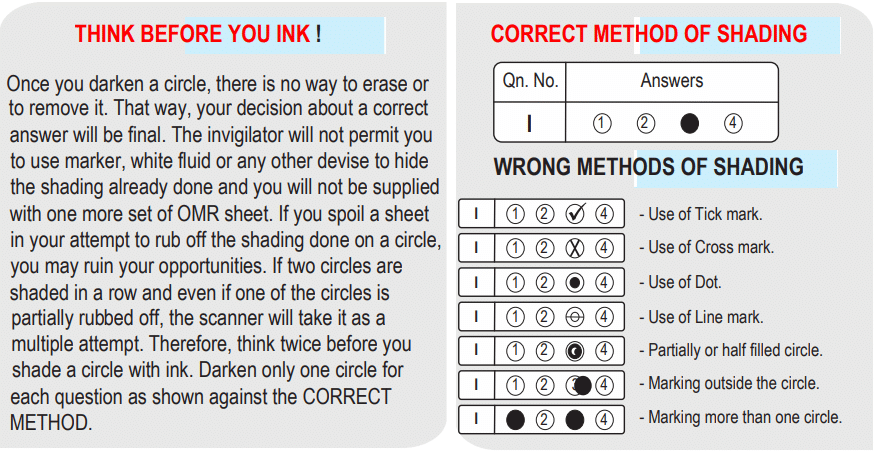
KCET 2026: Best Books
The golden rule shared by toppers and experts is that students should start with NCERT textbooks as they cover 80-90% of the questions directly, and then move to KCET-specific reference books for practice.
| Subject | Recommended Books |
|---|---|
| Physics |
|
| Chemistry |
|
| Mathematics |
|
| Biology |
|
KCET 2026: Preparation Tips
KCET 2026 requires a disciplined preparation for at least 6 months. Given below is a plan for six months.
Timeline Division:
- Months 1-2: Build strong fundamentals using NCERT textbooks and clear the basic concepts.
- Months 3-4: Focus on advanced problem-solving and mastering important topics.
- Months 5-6: Intensive revision, full-length mocks, error analysis, and PYQs.
Daily Routine: Study consistently for 6-8 hours, giving around 2 hours per subject.
Subject-Specific Tips
- Physics: Daily numerical practice with strong conceptual understanding.
- Chemistry: Use flashcards for reactions and periodic tables.
- Mathematics: Create formula sheets and practice questions in a time-bound manner.
- Biology: Master diagrams and use mnemonics for better retention.
KCET 2026: Mock Tests
Mock tests stimulate the actual exam, helping improve time management, accuracy, identify weak areas, reduce anxiety, and build exam temperament.
Find below the KCET 2026 Mock tests:
KCET: Previous Year Papers
| KCET Papers(2025) | Kannada Language Paper |
|---|---|
| Physics | Paper 2024 |
| Chemistry | Paper 2023 |
| Mathematics | |
| Biology |
KCET 2026: Frequently Asked Questions
Ques. Is the KCET syllabus 2026 the same as JEE Main?
Ans. No, the syllabus is not the same, though there is some overlap. JEE Main syllabus includes greater depth, application-based, and higher difficulty concepts, whereas KCET focuses more on fundamental concepts and direct questions.
Ques. Is Biology compulsory in KCET 2026?
Ans. No, Biology is only required for certain specific courses, such as Farm Sciences.
Ques. Where can I find the KCET 2026 syllabus?
Ans. The KCET 2026 syllabus can be found on the official website of KEA at https://cetonline.karnataka.gov.in/kea/.
Ques. How does the KCET Biology syllabus compare to the NEET syllabus?
Ans. The syllabus is very similar to the NEET syllabus; however, in NEET, the syllabus is covered in depth and includes more analytical questions as compared to more direct and concept-based questions in KCET.
Cut-offs
The KCET 2026 cutoffs will be released by Karnataka Examinations Authority after the counselling of students for admissions to various professional courses such as Engineering/Technology courses, Farm Science courses, Veterinary and Animal husbandry courses etc.
- The KCET ranks are determined by combining both KCET marks and 2nd PUC marks with 50:50 weightage.
- For RVSC college of Engineering, CSE closing rank for General Merit have increased by ~30% from 2023 to 2025.
- For PES University, Bangalore, CSE cutoff dropped ~ 52% in the year 2025, as compared to 2024.
- Veterinary has only around 200-300 total statewide seats compared to 65,000+ in Engineering, making it more competitive per seat.
As the KCET 2026 exam is scheduled for 23rd and 24th April and the results are anticipated in May 2026, understanding cutoffs are essential for strategic preparation to get a desired branch in desired college.
In top CSE seats such as in RVCE or BMSCE, SC/ST closing ranks reach around 5,000 to 10,000 while General Merit stays under ~1000 showing a 5-10 times difference, one of the largest category gaps in any state entrance exam.
In 2025, cutoffs were released round-wise by KEA after the counselling began in July. The final round cutoffs showed maximum relaxation due to withdrawals, upgrades and vacant seats.
In 2025, around 3 lakh+ candidates appeared for KCET and the difficulty of the exam was moderate.
| Round | KCET 2025 Cutoff | KCET 2025 Cutoff Hyderabad-Karnataka Region |
|---|---|---|
| KCET Cutoff 2025 Round 1 | Download PDF | Download PDF |
| KCET Cutoff 2025 Round 2 | Download PDF | Download PDF |
| KCET Cutoff 2025 Round 3 | Download PDF | Download PDF |
Related Articles:
Key Summary
- Overall the cutoffs have remained stable to slightly higher due to increased competition and high demand for branches like CSE/AI/ML.
- Last Year, RVCE Bangalore CSE general merit closed at ~234-500 which was one of the lowest in KCET history.
- Pharmacy and allied streams have seen final overall closing ranks around ~70k for Government College of Pharmacy Bangalore.
- Private mid-tier colleges such as Vydehi and Acharya & B.M. Reddy college saw massive late round jumps of around 150-250%, indicating vacant seats even after extended counselling to multiple rounds.
What is KCET Cutoff 2026?
KEA will determine the cutoffs for various courses depending on certain factors such as number of students, difficulty level of exam etc. Cutoffs are the closing ranks for a particular branch or course. For example BMS College of Engineering will get students for CSE upto rank 500, so the cutoff rank for CSE in BMSCE will be 500.
KCET cutoffs can be divided in two parts, qualifying and admission cutoffs. Qualifying cutoffs are minimum percentage required to become eligible for appearing in KCET exam. However the real game changer is the admission cutoffs which is based on the ranks derived from 50:50 weightage of both KCET marks and 2nd PUC marks.
KCET 2026: Qualifying Cutoff
Qualifying cutoff refers to the minimum aggregate percentage required by students in their 2nd PUC or Class 12th to be eligible for the KCET exam and counselling.
| Category | Percentage |
|---|---|
| General Category | Minimum 45% aggregate in PCM/PCB |
| Reserved Categories | Minimum 40% aggregate in PCM/PCB |
Kannada Language Test: It is a mandatory qualifying test only for certain candidates (Horanadu & Gadinadu Kannadigas), which requires 12 marks out of 50 to qualify.
Around 456 candidates out of 1520 failed, and 12 candidates scored 0/50 in the Language test.
KCET 2026: Expected Cutoff Course and College-Wise
As per 2025 exam trend, the CSE / AI will remain highly competitive with high cutoffs especially at high demanded colleges such as RVCE. Emerging branches such as AI/ML, Data Science often have ~500-1000 ranks higher than CSE in the same college.
For Engineering Courses
| College Name | CSE (Computer Science) | AI/ML or AI & Data Science | ISE / CS (AI&ML) / Related | ECE (Electronics & Comm.) | Mechanical / EEE | Civil / Other Core Branches |
|---|---|---|---|---|---|---|
| RV College of Engineering (RVCE), Bangalore | 150–500 | 400–900 | 300–700 | 700–1,400 | 5,000–9,000 | 12,000–20,000+ |
| BMS College of Engineering (BMSCE), Bangalore | 300–900 | 600–1,300 | 700–1,500 | 1,200–2,800 | 8,000–18,000 | 15,000–30,000+ |
| PES University (Ring Road Campus), Bangalore | 800–2,000 | 1,500–3,500 | 1,200–2,800 | 2,000–4,500 | 12,000–25,000 | 20,000–35,000+ |
| MS Ramaiah Institute of Technology (MSRIT) | 800–2,200 | 2,000–4,500 | 1,800–3,500 | 2,500–5,000 | 12,000–25,000 | 20,000–40,000+ |
| Bangalore Institute of Technology (BIT) | 4,000–9,000 | 6,000–11,000 | 5,000–10,000 | 5,000–9,000 | 18,000–35,000 | 30,000–50,000+ |
| New Horizon College of Engineering (NHCE) | 12,000–20,000 | 15,000–25,000 | 14,000–22,000 | 12,000–20,000 | 30,000+ | 40,000+ |
| Sir M. Visvesvaraya Institute of Technology | 7,000–15,000 | 9,000–18,000 | 8,000–16,000 | 7,000–13,000 | 20,000–40,000 | 35,000+ |
For Farm Sciences Courses
| Course / Branch | UAS Bangalore (Top Preference) | UAS Dharwad / UAHS Bagalkot | UAS Raichur / UAHS Shivamogga |
|---|---|---|---|
| B.Sc (Hons) Agriculture | 2,000–8,000 | 5,000–15,000 | 8,000–20,000 |
| B.Sc (Hons) Horticulture | 4,000–12,000 | 8,000–18,000 | 10,000–22,000 |
| B.Sc (Hons) Forestry | 6,000–15,000 | 10,000–20,000 | 12,000–25,000 |
| B.Sc (Hons) Sericulture | 8,000–18,000 | 12,000–22,000 | 15,000–30,000 |
| B.Tech (Food Technology / Agri Engineering) | 10,000–22,000 | 15,000–28,000 | 20,000–35,000 |
| B.Sc (Hons) Agri Business Management | 5,000–15,000 | 10,000–20,000 | 15,000–28,000 |
For Pharmacy courses
| College / Institute | B.Pharm (Bachelor of Pharmacy) | Pharm.D (Doctor of Pharmacy) |
|---|---|---|
| Government College of Pharmacy, Bangalore (Top Govt) | 10,000–25,000 | 8,000–20,000 |
| Government College of Pharmacy, Gulbarga / Other Govt | 20,000–50,000 | 15,000–40,000 |
| Al-Ameen College of Pharmacy, Bangalore | 25,000–60,000 | 20,000–50,000 |
| Acharya & BM Reddy College of Pharmacy, Bangalore | 30,000–80,000 | 25,000–70,000 |
| MS Ramaiah University of Applied Sciences, Bangalore | 40,000–90,000 | 30,000–80,000 |
| Dayananda Sagar College of Pharmacy, Bangalore | 50,000–1,00,000 | 40,000–90,000 |
| PES College of Pharmacy / Other Bangalore Privates | 60,000–1,20,000 | 50,000–1,00,000 |
| Vydehi Institute of Pharmacy / Other Mid-Tier | 80,000–1,80,000+ | 70,000–1,50,000+ |
For Veterinary and Animal Husbandry courses
| Veterinary College / Institute | Expected Closing Rank (GM) |
|---|---|
| Veterinary College, Bangalore (Top Preference) | 800–2,000 |
| Veterinary College, Bidar | 1,900–3,600 |
| Veterinary College, Shimoga | 3,000–6,000 |
| Veterinary College, Hassan | 4,000–8,000 |
| Other Affiliated / Constituent Colleges | 6,000–12,000+ |
KCET 2026: Expected Cutoff Category-Wise
The category-wise cutoff highlight the relaxation given to reserved categories to ensure social justice and equality. The categories such as SC/ST/OBC/EWS etc come under reserved categories and they get significant relaxation which means 2-5 times higher ranks (closing ranks) than unreserved category students.
For Engineering Courses
| College / Institute | Branch (CSE) Closing Ranks | Branch (AI/ML or Related) Closing Ranks | Branch (ECE) Closing Ranks | Branch (Mechanical / Core) Closing Ranks |
|---|---|---|---|---|
| RV College of Engineering (RVCE), Bangalore (Top) |
|
|
|
|
| BMS College of Engineering (BMSCE), Bangalore |
|
|
|
|
| PES University (Ring Road Campus), Bangalore |
|
|
|
|
| MS Ramaiah Institute of Technology (MSRIT), Bangalore |
|
|
|
|
| Bangalore Institute of Technology (BIT), Bangalore |
|
|
|
|
For Farm Sciences Courses
| Course / Branch | UAS Bangalore (Top Preference) | UAS Dharwad / UAHS Bagalkot | UAS Raichur / UAHS Shivamogga |
|---|---|---|---|
| B.Sc (Hons) Agriculture |
|
|
|
| B.Sc (Hons) Horticulture |
|
|
|
| B.Sc (Hons) Forestry |
|
|
|
| B.Sc (Hons) Sericulture |
|
|
|
| B.Tech (Food Technology / Agri Engineering) |
|
|
|
| B.Sc (Hons) Agri Business Management |
|
|
|
For Pharmacy courses
| College / Institute | B.Pharm (Bachelor of Pharmacy) Closing Ranks | Pharm.D (Doctor of Pharmacy) Closing Ranks |
|---|---|---|
| Government College of Pharmacy, Bangalore (Top Govt) |
|
|
| Government College of Pharmacy, Gulbarga / Other Govt |
|
|
| Al-Ameen College of Pharmacy, Bangalore |
|
|
| Acharya & BM Reddy College of Pharmacy, Bangalore |
|
|
| MS Ramaiah University of Applied Sciences, Bangalore |
|
|
| Dayananda Sagar College of Pharmacy, Bangalore |
|
|
| PES College of Pharmacy / Other Bangalore Privates |
|
|
| Vydehi Institute of Pharmacy / Other Mid-Tier |
|
|
For Veterinary and Animal Husbandry courses
| Veterinary College / Institute | OBC Closing Ranks | SC Closing Ranks | ST Closing Ranks |
|---|---|---|---|
| Veterinary College, Bangalore (Top Preference) | 2,000–6,000 | 6,000–16,000 | 8,000–22,000+ |
| Veterinary College, Bidar | 3,000–8,000 | 8,000–20,000 | 10,000–28,000+ |
| Veterinary College, Shimoga | 5,000–12,000 | 12,000–30,000 | 15,000–35,000+ |
| Veterinary College, Hassan | 6,000–15,000 | 15,000–35,000 | 18,000–45,000+ |
| Other Affiliated / Constituent Colleges | 10,000–20,000+ | 20,000–50,000+ | 22,000–55,000+ |
KCET 2026: Cutoff Shifts
Cutoffs in KCET will be relaxed in later rounds due to withdrawal, upgrades and vacant seats. However, top branches such as CSE in RVCE will see minimal shifts due to high competition and demand. In 2025, for pharmacy courses closing ranks were around ~70k.
| Course / Branch / College Example | Mock Allotment (Tightest) | Round 1 (Initial) | Round 2 (Moderate Relaxation) | Round 3 / Final (Maximum Relaxation) | Typical % Shift from Round 1 to Final |
|---|---|---|---|---|---|
| Engineering – CSE (Top Colleges), e.g., RVCE Bangalore | 150–400 | 200–500 | 300–800 | 400–1,000 | 50–100% |
| Engineering – CSE (Mid-Tier), e.g., BIT Bangalore | 3,000–5,000 | 4,000–6,000 | 5,000–9,000 | 6,000–12,000 | 80–150% |
| Engineering – ECE / AI/ML, e.g., BMSCE Bangalore | 800–2,000 | 1,200–2,800 | 2,000–4,500 | 2,500–6,500 | 80–140% |
| Engineering – Mechanical / Civil e.g., MSRIT Bangalore | 5,000–12,000 | 8,000–15,000 | 12,000–22,000 | 18,000–35,000+ | 120–200% |
| B.Pharm / Pharm.D (Govt Bangalore) | 8,000–20,000 | 15,000–40,000 | 30,000–70,000 | 50,000–90,000+ | 150–200% |
| B.Pharm / Pharm.D (Private Mid-Tier) e.g., Vydehi | 40,000–80,000 | 60,000–1,20,000 | 1,00,000–1,80,000 | 1,50,000–2,20,000+ | 150–250% |
| B.Sc (Hons) Agriculture (UAS Bangalore) | 2,000–5,000 | 4,000–8,000 | 6,000–12,000 | 8,000–18,000 | 100–150% |
| B.Sc Horticulture / Forestry | 4,000–10,000 | 6,000–15,000 | 10,000–20,000 | 15,000–30,000 | 130–180% |
| B.V.Sc & A.H (Veterinary – Bangalore) | 800–1,500 | 1,000–2,500 | 2,000–4,000 | 3,000–6,500 | 100–150% |
| B.V.Sc & A.H (Other Colleges), e.g., Bidar / Shimoga | 2,000–4,000 | 3,000–6,000 | 5,000–10,000 | 8,000–15,000 | 150–200% |
KCET 2026: Marks Vs Ranks
Students will get marks in KCET out of 180 with 3 papers of 60 marks each. However, only the KCET marks will not determine the ranks acquired by students as the ranks will be determined on the basis of 50:50 weightage to both KCET marks and 2nd PUC normalized marks.
For Engineering / PCM Streams
| Marks Range (out of 180) | Expected Rank Range |
|---|---|
| 175 – 180 | 1 – 50 |
| 170 – 174 | 51 – 200 |
| 165 – 169 | 201 – 500 |
| 160 – 164 | 501 – 1,000 |
| 155 – 159 | 1,001 – 2,000 |
| 150 – 154 | 2,001 – 3,000 |
| 140 – 149 | 3,001 – 5,000 |
| 130 – 139 | 5,001 – 10,000 |
| 120 – 129 | 10,001 – 20,000 |
| 110 – 119 | 20,001 – 30,000 |
| 100 – 109 | 30,001 – 40,000 |
| 90 – 99 | 40,001 – 50,000 |
| 80 – 89 | 50,001 – 60,000 |
| 70 – 79 | 60,001 – 80,000 |
| Below 70 | 80,001+ |
For Pharmacy / PCB and Agri/Vet Streams
| Marks Range (out of 180) | Expected Rank Range |
|---|---|
| 170 – 180 | 1 – 200 |
| 160 – 169 | 201 – 1,000 |
| 150 – 159 | 1,001 – 3,000 |
| 140 – 149 | 3,001 – 6,000 |
| 130 – 139 | 6,001 – 10,000 |
| 120 – 129 | 10,001 – 20,000 |
| Below 120 | 20,001+ |
KCET 2026: Safe Score
Safe score which are above the closing marks for that rank, increase the probability for students to get their desired college / branch despite the yearly fluctuations in cutoffs.
Based on 2025 data under 500 ranks will require a score of around 170+ as seen in previous years toppers.
| Target Rank Range (GM) | Safe KCET Score (out of 180) |
|---|---|
| Under 100–500 | 165–175+ |
| Under 500–1,000 | 160–168 |
| Under 1,000–2,000 | 150–160 |
| Under 2,000–5,000 | 140–150 |
| Under 5,000–10,000 | 130–140 |
| Under 10,000–20,000 | 115–130 |
| Under 20,000–50,000 | 95–115 |
| Above 50,000 | Below 95 |
KCET 2026: Factors Influencing Cutoffs
Cutoffs are determined by the KEA on the basis of several factors such as number of candidates, difficulty of the exam, seats or vacancies etc. Given below are various factors taht influence the KCET cutoffs:
- Number of Registered / Appearing / Qualified Candidates
- Difficulty level of the exam
- Total number of available seats or seat matrix
- Performance of candidates in 2nd PUC as well as in KCET 2026
- Reservation Policies and Quota’s
- Popularity of Branch / College / Course
- Counselling Rounds
KCET 2026: Frequently Asked Questions
Ques. What is the difference between qualifying and admission cutoff in KCET 2026?
Ans. Qualifying cutoff is the minimum eligibility to appear for the exam and counselling process whereas admission cutoff is based on rank acquired by students on the basis of merit and marks obtained.
Ques. Do cutoffs differ for different categories such as SC, ST and OBC in KCET 2026?
Ans. Yes, the categories get relaxation due to fixed quota of seats reserved for them. For example a general category student should require around a rank of 500 for CSE but SC/ST candidate can get CSE at around 10,000 rank.
Ques. Can I predict my college/branch before the release of official cutoffs?
Ans. Yes, you can easily predict your college/branch using your expected marks or rank through college predictors available online. Given below is a college predictor of Collegedunia which you can use.
Ques. Is there any change in cutoff policy for KCET 2026?
Ans. As of now there are no changes in the cutoff policy. However, students are advised to check the official website for any changes in the near future.
Ques. If my rank is on borderline, should I wait for later rounds in KCET 2026?
Ans. Yes, as many seats will open in 2nd or 3rd rounds due to vacant seats. You should fill multiple options in choice filing or option entry to get a seat.
Results
The KEA has declared the KCET Result 2025 on 24 May 2025 on the official website - cetonline.karnataka.gov.in/kea, along with the KCET Scorecard 2025. The KEA KCET result link is active from 2 PM onwards. Candidates can access by logging in with your application number and password to download the KCET scorecard.
Bhavesh Jayanthi tops the engineering rank, followed by Satwik B Biradar and Dhinesh Gowthami Shankar Arunachalam — all from Bengaluru schools.
The eligibility for the KCET 2025 course has decreased.
- In KCET 2025, a total of 2,62,195 students are eligible for engineering courses as compared to the 2.75 lakh students who were eligible last year.
- A total of 2,14,588 people were eligible for B.Sc. (Agri) in KCET 2025, as compared to 2.15 lakh students who were eligible in KCET 2024.
- In KCET 2025, 1,98,679 students were accepted for the BNYS course, out of 2.19 lakh students who were eligible for the BNYS courses.
KEA posted on their X handle saying “UGCET-25 results will be announced on May 24 from 2 PM. Higher Education Minister Dr. M.C. Sudhakar will declare them at 11:30 AM at the KEA office. Result links go live post 2 PM.”
To participate in the KCET 2025 counselling process the candidate must achieve specfic qualifying marks in their KCET exam, for the general category, a minimum of 50% is required, while candidate belongs to the SC/ST/OBC/EWS categories need to secure atleast 40%.

KCET 2025 Result Dates
The KCET 2025 is scheduled for April 16-17, 2025, with the Kannada language test on April 15, 2025. The KCET Result is expected to be released in the third week of April 2025; before that, the Provisional Answer key is anticipated to be released in the third week of May 2025.
| Event | Date |
|---|---|
| KCET Exam Dates | April 16–17, 2025 |
| Kannada Language Test | April 15, 2025 |
| Provisional Answer Key Release | April 18, 2025 |
| Result Declaration | Kannada: April 25, 2025 May 24, 2025 |
| Document Verification at KEA Bangalore | June 2025 |
| Option Entry (Choice Filling) | June/July 2025 |
| First Mock Seat Allotment Publication | July 2025 |
| Modification of Options (if required) | July 2025 |
| Second Mock Seat Allotment Publication | July 2025 |
| Final Seat Allotment Publication | August 2025 |
| Reporting to Allotted Colleges | August 2025 |
KCET Result 2025 Latest Trends
KCET Result 2025
| Particulars | Details |
|---|---|
| KCET Result Date 2025 | May 24, 2025 April 25, 2025 (Kannada Language Test) |
| Official Websites | cetonline.karnataka.gov.in, kea.kar.nic.in |
| Conducting Body | Karnataka Examination Authority (KEA) |
| Login Credentials | Registration Number and First Four Characters of Name |
| Helpdesk Details | Karnataka Examinations Authority, Sampige Road, 18th Cross, Malleshwaram, Bangalore - 560012Phone: 080 - 23460460Website: kea.kar.nic.in |
How to Check KCET Result 2025?
Follow the steps below to download your KCET 2025 scorecard:
Visit the official website – kea.kar.nic.in
The candidate needs to enter their Registration Number and the First Four Characters of their Name.
KCET Scorecard
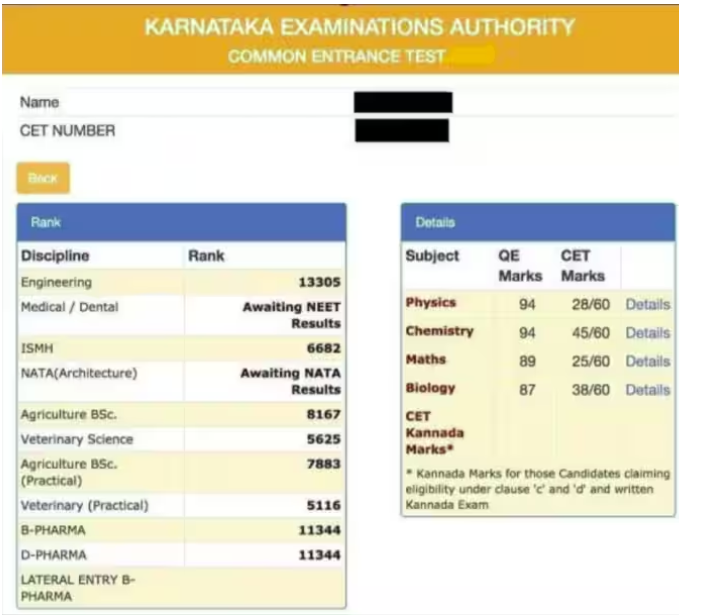
KCET 2025 Details Mentioned
Candidates must verify the following details on their scorecard:
- Candidate’s Name
- Subject-wise Marks
- Total Marks
- Rank Secured
- Qualifying Status
In case of discrepancies, candidates must immediately contact KEA for corrections.
KCET Result 2025: Important Points
- The result will be available online only.
- Candidates will need their registration number and name to check results.
- Only shortlisted candidates can move forward in the admission process.
- Objections against the result can be raised within three days of declaration.
How to Challenge KCET Result 2025?
KEA allows candidates to raise objections to their results within three days of declaration. If found valid, a revised result will be issued to those candidates separately.
KCET 2025 Marks vs Rank
The KCET Marks vs Rank shows a relation between the marks scored by a candidate and what rank they can get. Candidates scoring above 120 marks are expected to fall in the top 100-200 ranks, making them eligible for admission to top-tier institutes and high-demand branches. Those with 100-119 marks fall in the 200-500 rank range, suitable for reputable institutes but slightly lower-ranked branches. Candidates with 85-99 marks will fall in the 500-1000 rank range, typically securing seats in less competitive branches like Mechanical or Civil Engineering.
KCET Marks vs Rank for Engineering Courses (General Category)
| Marks Range | Approximate Rank | Course Type | Insight |
|---|---|---|---|
| Above 120 | Top 100–200 | Competitive branches (CSE, EE, ECE) | Ideal for top institutes and branches |
| 100–119 | 200–500 | Engineering (other branches) | Reputable institutes, some competitive branches |
| 85–99 | 500–1000 | Mechanical, Civil, IT | Good for mid-tier colleges and courses |
| 70–84 | 1000–2500 | Less competitive branches | Entry to less competitive courses |
| 50–69 | 2500–5000 | Less competitive branches | Likely to get into private colleges |
| Below 50 | 5000+ | Less competitive courses | Difficult for top institutes |
KCET Marks vs Rank for Medical & Pharmacy Courses
| Marks Range | Approximate Rank | Course Type | Insight |
|---|---|---|---|
| Above 120 | Top 500 | MBBS, BDS | Top medical colleges, high demand |
| 110–120 | 500–1500 | MBBS, BDS | Good for lower-ranked medical colleges |
| 90–110 | 1500–5000 | Pharmacy, Medical | Suitable for pharmacy courses and lower-tier medical colleges |
| 70–89 | 5000+ | Pharmacy, Medical | Accessible for pharmacy courses, difficult for MBBS/BDS |
- Engineering Candidates:
Scoring above 100 marks is crucial for getting admission into top engineering institutes for competitive branches like CSE and EE.
- Medical and Pharmacy Candidates:
Candidates with scores above 120 marks are likely to secure seats in top medical courses (MBBS), while pharmacy courses are more accessible with scores ranging from 70–90 marks.
- Reserved Categories:
Reserved category candidates generally have lower cutoff marks than the General category, meaning a given score will translate to a better rank.
What is the rank for 70 marks in KCET?
A score of 70 marks results in a rank between 1000 and 2500 in the engineering courses with less competitive branches like Mechanical Engineering, Civil Engineering and IT at mid-tier or private institutes.
- Engineering (70 marks): A rank between 1000 and 2500 for less competitive branches.
- Medical (70 marks): Likely to be beyond 5000 rank, so securing MBBS/BDS is difficult.
- Pharmacy (70 marks): Possible admission to pharmacy programs in private colleges or lower-ranked institutes.
| Marks | Approximate Rank | Course Type | Insight |
|---|---|---|---|
| 70 marks | 1000–2500 | Engineering (Mechanical, Civil, IT) | Likely to get admission in mid-tier or private colleges in less competitive branches |
| 5000+ | Medical (MBBS/BDS) | MBBS/BDS difficult but possible for pharmacy courses | |
| 5000+ | Pharmacy | Pharmacy courses in private colleges or lower-ranked institutes |
Is 70 a good score in KCET?
Scoring a 70 mark in KCET is generally considered a moderate score; this score falls in the rank range of 5,500-6,000 in the engineering courses, which can get the opportunity to get the admission in less competitive branches like Civil and Mechanical Engineering at mid-tier or private institutions.
A score of 70 marks is generally insufficient for securing a seat in MBBS or BDS programs at reputable medical colleges.
Candidates with 70 marks may find opportunities in pharmacy programs (e.g., B.Pharm) at various institutions, though options may be limited to private colleges or less competitive programs.
KCET Cutoff 2025 Category-wise
The category-wise cutoff can differ significantly. Reserved categories like OBC, SC, ST, and EWS typically have a lower cutoff than the General category.
| Category | Engineering (Rank Range) | Medical (Rank Range) | Pharmacy (Rank Range) |
|---|---|---|---|
| General (GM) | 1–5,000 | 1–5,000 | 1–10,000 |
| OBC | 2,000–7,000 | 2,000–7,000 | 3,000–8,000 |
| SC | 5,000–10,000 | 5,000–10,000 | 7,000–12,000 |
| ST | 8,000–15,000 | 8,000–15,000 | 10,000–15,000 |
| EWS | 3,000–6,000 | 3,000–6,000 | 4,000–8,000 |
KCET Cutoff Course wise
The KCET cutoff varies across different institutes, courses, and categories. The following data insights provide a rough estimate of what the cutoffs might look like in 2025 based on trends from previous years.
What is the cutoff for KCET 2025?
As per the previous years trends, the expected qualifying marks for KCET 2025:
- General Category: Minimum of 50% in the qualifying examination.
- SC/ST/OBC/EWS Categories: Minimum of 40% in the qualifying examination.
KCET Engineering Courses (General Category)
| Branch | Expected Cutoff (Rank) | Marks Range |
|---|---|---|
| Computer Science Engineering | 1–500 | 120–150 marks |
| Electrical Engineering | 500–1,500 | 100–120 marks |
| Mechanical Engineering | 1,500–3,500 | 90–110 marks |
| Civil Engineering | 3,500–6,000 | 80–100 marks |
| Electronics and Communication Engineering | 1,000–2,500 | 100–115 marks |
| Information Technology | 1,000–3,000 | 100–115 marks |
KCET Pharmacy Courses
| Course | Expected Cutoff (Rank) | Marks Range |
|---|---|---|
| Pharmacy | 5,000–10,000 | 70–90 marks |
KCET Medical & Dental Courses (For Biology Students)
| Course | Expected Cutoff (Rank) | Marks Range |
|---|---|---|
| MBBS | 1–3,000 | 120–145 marks |
| BDS | 3,000–7,000 | 110–130 marks |
KCET Result 2025 Previous Years' Analysis
KEA will release the KCET 2025 statistics post-result announcement. Meanwhile, check the stats from previous years:
KCET 2024 Statistics
| Particulars | Details |
|---|---|
| Registered Candidates | 3,10,314 |
| Qualified Candidates | 2,74,595 |
KCET 2022 Result Statistics
| Particulars | Details |
|---|---|
| Appeared for KCET 2022 | 2,10,829 |
| Passed (Engineering) | 1,71,656 |
| Female Candidates Passed (Engineering) | 88,575 |
KCET 2021 Rank List Eligibility
| Stream | Number of Candidates |
|---|---|
| Engineering | 1,83,231 |
| BPharma | 1,86,638 |
| Agriculture | 1,52,518 |
| Pharma-D | 1,86,638 |
| Veterinary Sciences | 1,55,760 |
| BNYS | 1,55,910 |
KCET 2020 Subject-Wise Attendance
| Subject | % Appeared |
|---|---|
| Physics | 90.23% |
| Chemistry | 90.10% |
| Mathematics | 91.92% |
| Biology | 79.90% |
KCET 2025 Toppers List
The KCET Topper list will be available on the official website post-result declaration. Below are some confirmed toppers:
Who got the first rank in CET?
In the KCET 2024, Harsha Karthikeya Vutukuri secured the first rank in the engineering stream. He is affiliated with Narayana Olympiad School in Sahakara Nagar, Bangalore.
The top performers in the KCET 2024 engineering examination are as follows:
- Rank 1: Harsha Karthikeya Vutukuri
- Rank 2: Manoj Sohan Gajula
- Rank 3: Abhinav P J
- Rank 5: Animesh Singh Rathore
- Rank 6: Prabhav P
- Rank 7: Videep Reddy Jalapally
KCET Toppers 2024 (Engineering Stream)
| Rank | Topper Name |
|---|---|
| 1 | Harsha Karthikeya |
| 2 | To be updated |
| 3 | To be updated |
| 4 | To be updated |
| 5 | Animesh Singh Rathore |
| 6 | Prabhav P |
| 7 | Videep Reddy Jalapally |
KCET Toppers 2023 – Engineering
| Rank | Topper Name |
|---|---|
| 1 | Vignesh Nataraj Kumar |
| 2 | Arjun Krishnaswamy |
| 3 | Samrudh Shetty |
KCET Toppers 2023 – BPharma
| Rank | Topper Name |
|---|---|
| 1 | Pratheeksha R |
| 2 | Malavika Kapoor |
| 3 | Madhav Soorya Tadepalli |
KCET Toppers 2023 – Pharma D
| Rank | Topper Name |
|---|---|
| 1 | Pratheeksha R |
| 2 | Malavika Kapoor |
| 3 | Madhav Soorya Tadepalli |
KCET Toppers 2023 – BSc Nursing
| Rank | Topper Name |
|---|---|
| 1 | Malavika Kapoor |
| 2 | Pratheeksha |
| 3 | Chandan Gowda |
KCET Toppers 2022
| Topper Name | Percentage |
|---|---|
| Apoorv Tandon | 98.611% |
| Siddhartha Singh | 98.334% |
| Atmakuri Venkata Madhi | 98.111% |
| Shishir RK | 97.945% |
| Vishal Bysani | 97.5% |
| Saagar | 97.5% |
| Mahesh Kumar V | 97.167% |
| Siddarth GV | 97.056% |
| Sathvik V | 96.834% |
KCET Answer Key 2025
KEA will release the KCET 2025 provisional answer key soon after the exam. Candidates can:
- Download it from - kea.kar.nic.in
- Raise objections within the stipulated deadline
- Check the KCET 2024 final answer key which will be released after resolving objections
The final KCET result 2025 will be based on this final answer key.
KCET Counselling 2025
After the results are out, KCET 2024 counselling process will begin:
KCET Counselling Steps:
- Register online for counselling
- Fill and lock choices of colleges/courses
- Check seat allotment results
- Report to the allotted institute for document verification
Only qualified candidates will be eligible to participate in the counselling process.
FAQs
1. When will the KCET Result 2025 be declared?
The KCET Result 2025 date is yet to be officially announced by KEA. Candidates are advised to regularly check the official websites — kea.kar.nic.in and cetonline.karnataka.gov.in — for updates.
2. How can I check my KCET 2025 result online?
You can check your KCET 2025 result by visiting kea.kar.nic.in, clicking on the KCET result link, and entering your registration number and the first four characters of your name.
3. What details are mentioned in the KCET 2025 scorecard?
The KCET 2025 scorecard will contain the candidate’s name, subject-wise marks, total marks secured, rank obtained, and qualifying status. Ensure all details are correct.
4. Can I challenge the KCET result 2025?
Yes, candidates can raise objections or challenge their KCET 2025 result within three days of its declaration. The revised result will be issued after evaluation by KEA.
5. What happens after the KCET result is announced?
After the declaration of KCET 2025 results, qualified candidates will be eligible for the KCET counselling process which includes registration, choice filling, seat allotment, and document verification.